
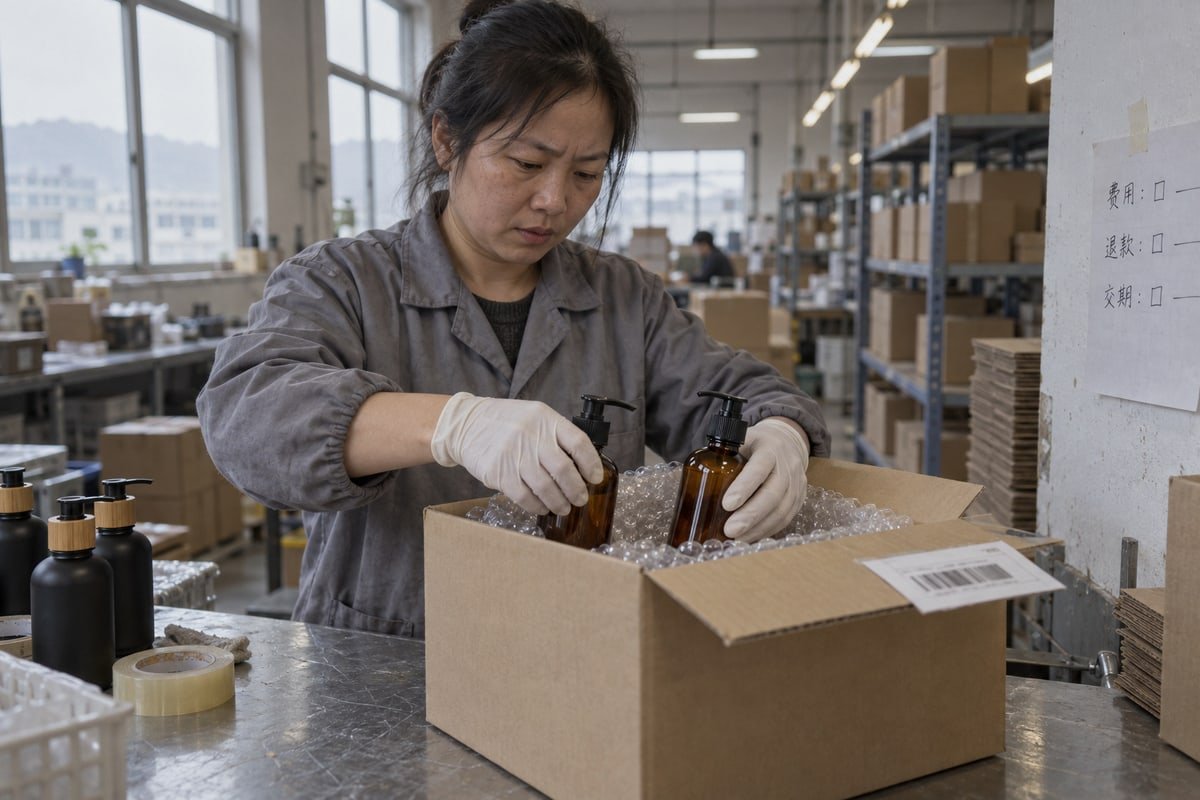
Sampling and sample fees when purchasing PET bottles confuse more buyers than unit prices do custom PET samples 1. One rushed sample can mean leaks, delays, and returns. Our Taizhou line fixes that early.
To arrange PET bottle sampling and confirm sample fees, first tell the supplier whether you need a stock sample or a custom prototype, ask what the fee covers, confirm shipping responsibility, and get the refund-against-MOQ terms in writing before paying. Then test the sample before approving mass production.
That is the short version. The rest of this guide walks through each step. I will show you what to ask, what a fair fee looks like, what to test, and how to keep the timeline tight.
How do I request PET bottle samples from a supplier before placing a bulk order?
Last quarter an Australian procurement manager messaged us on WhatsApp asking for a sample with no size, neck finish, or quantity attached. We needed several questions before quoting.
Request PET bottle samples by sending the supplier a short brief: bottle capacity, neck finish, color, stock or custom, and target order quantity. State whether you need a stock sample or a production-matching prototype, provide your courier account, and ask for written sample fee and lead time terms.
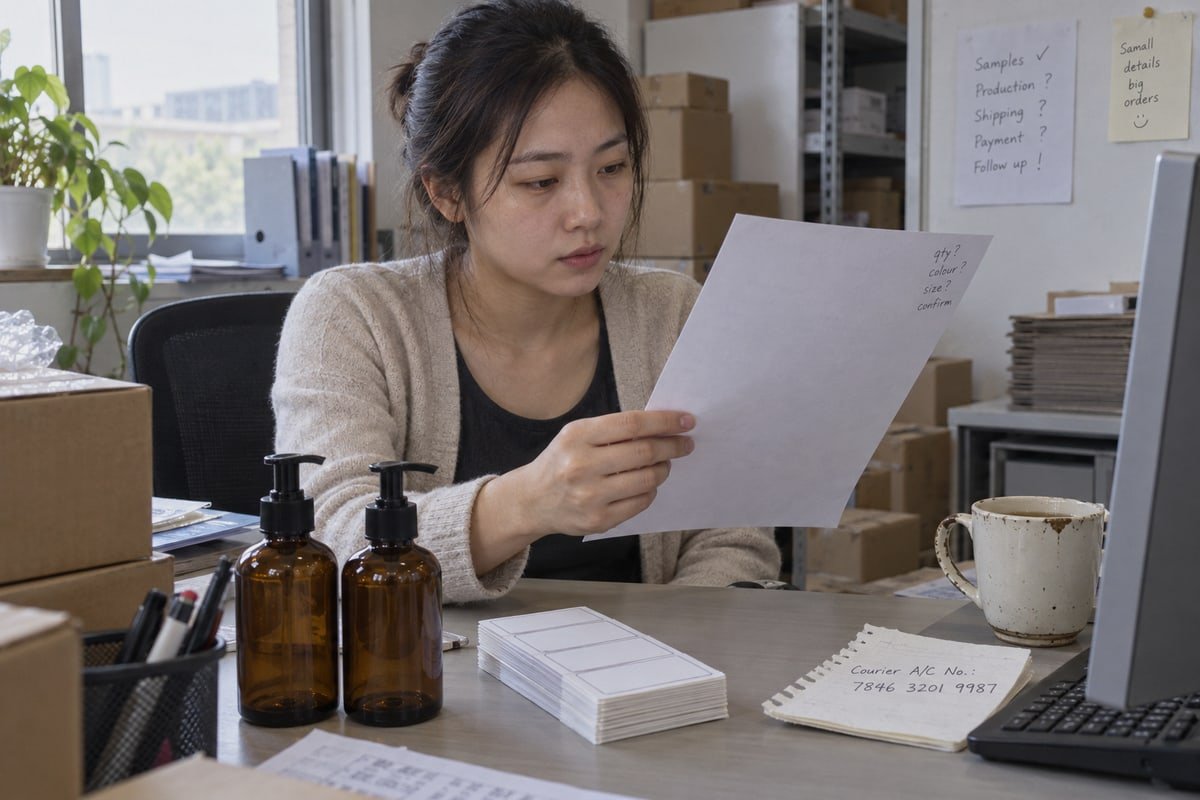
A good sample request is really a mini purchase order. The clearer it is, the faster we can act on it. In our experience exporting to the US, Germany, and Australia, the buyers who send a one-page brief get samples in days. The buyers who send a one-line message get a chain of emails instead.
Step-by-step request process
- Define the bottle. List capacity, shape, PET color, and neck finish specifications. If you have a reference photo, attach it.
- Choose stock or custom. Ask the supplier which of your specs already exist in their catalog. A stock bottle skips prototype development entirely.
- State your target volume. Suppliers set sample terms based on the likely minimum order quantity. A buyer planning 10,000 units gets different treatment from one planning 500.
- Give a courier account. Share your DHL, FedEx, or UPS number so the sample ships freight collect. This removes logistics markup and keeps the fee discussion clean.
- Ask for written terms. Fee, what it covers, refund conditions, and lead time. All in one email.
- Request a spec sheet with the sample. Drawings, gram weight, and brimful capacity should travel with the bottle.
Stock sample vs custom sample
Here is how the two paths differ in practice.
| Item | Stock sample | Custom sample |
|---|---|---|
| Source | Existing production run | New preform design or new mold |
| Typical fee | Free or low cost, shipping often billed | Production fee plus possible custom mold cost |
| Lead time | About 2–7 days | About 7–15 days, up to 15–30 with new tooling |
| Matches final quality | Yes, if from the same mold | Only if made on the production mold |
| Best for | Fit checks, closure trials, quick launches | New shapes, color matching, decoration approval |
One more option worth raising. For ergonomic and aesthetic sign-off on a brand-new shape, ask for a high-fidelity 3D-printed prototype first. It cannot be filled or leak-tested, but it lets you approve proportions before anyone cuts steel. That saves a round of international shipping and lowers the cost of the physical prototype stage.
Why do suppliers charge sample fees, and are these costs refundable after confirming my order?
Every custom sample forces a trade-off on our side: pull a running blow molding line 2 to make ten bottles, or delay a paying order. Neither is free.
Suppliers charge sample fees because custom PET samples consume material, labor, machine setup, and sometimes mold work. Many suppliers refund or credit the fee against your first bulk order once the minimum order quantity is met, but stock samples are often free except for shipping.
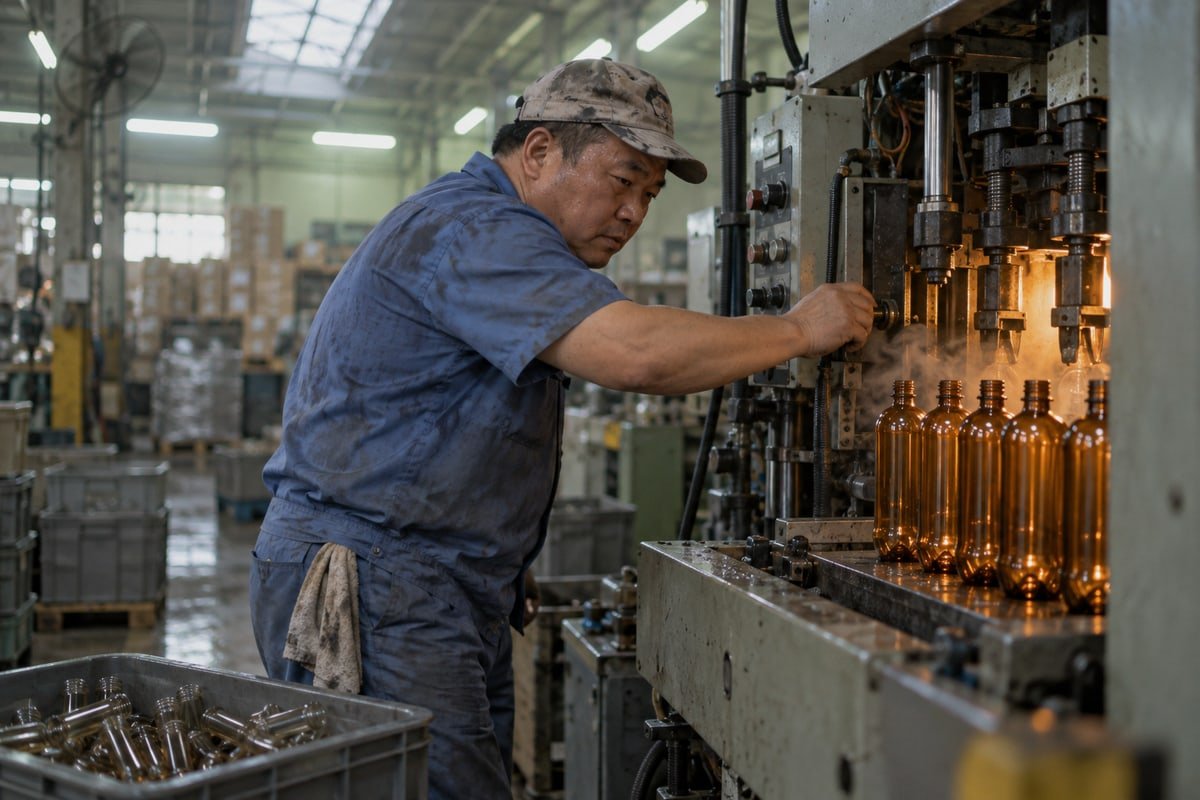
I understand the buyer's view. You have not ordered yet, so why pay? But look at it from the production floor. A custom PET sample means stopping a machine, loading a specific preform, adjusting heat and blow pressure, running scrap until the wall is right, then packing a handful of bottles. The setup takes the same effort whether we make ten bottles or ten thousand. That is why the fee exists.
What typical sample fees look like
Fees vary widely, but the ranges below cover most supplier listings I have seen.
| Sample type | Common fee range | Shipping | Refund practice |
|---|---|---|---|
| Stock PET bottle | Free to about $20 | Buyer pays courier, or freight collect | Usually no fee to refund |
| Stock bottle with priority shipping bundled | Around $15 all-in | Included | Rarely refunded |
| Custom color or decoration on existing mold | About $20–$100 | Buyer pays | Often credited at MOQ |
| New mold prototype | Much higher; tied to custom mold cost | Buyer pays | Mold fee sometimes amortized into unit price |
The sample refund policy as a trust signal
Here is the point I want you to take away. A refundable sample fee is not just a discount. It tells you the supplier expects to win the order and is willing to carry some risk with you. When we credit a sample fee back on the first bulk invoice, we do it because the sample proved the buyer was serious. Suppliers see sampling as a qualification step. Buyers who pay a modest fee and give detailed feedback almost always convert.
Two objections buyers raise
"Free samples are better." Not always. A free stock bottle that still costs you courier charges is not free. And a free custom sample from a supplier who absorbs every cost can signal thin margins. That sometimes shows up later as weaker quality control inspection 3 or slipped dates. I would rather see a fair, clearly explained fee than a suspiciously generous one.
"The fee should be waived if I am ordering anyway." This is reasonable, and it is exactly what a sample fee credit clause does. Ask for it in writing: fee deducted from the final invoice once the agreed MOQ is met. Common PET bottle MOQs sit at 500, 1,000, 5,000, 10,000, or 20,000 units depending on complexity. Tie the credit to the tier you can realistically hit, then fold the discussion into your unit price negotiation so the whole package is judged together.
What details should I confirm during sampling to avoid QC issues like leakage or quality mismatches?
A pump-bottle sample once passed our visual check but leaked in a courier box on the way to Germany. The neck finish was fine; the wall thickness was not.
During PET bottle sampling, confirm neck finish specifications such as 18/410 or 24/410, brimful capacity, gram weight consistency, closure torque and seal, formulation compatibility, and color and clarity. Fill samples with your actual product, run a stress-cracking test, and sign off a gold sample as the QC benchmark.
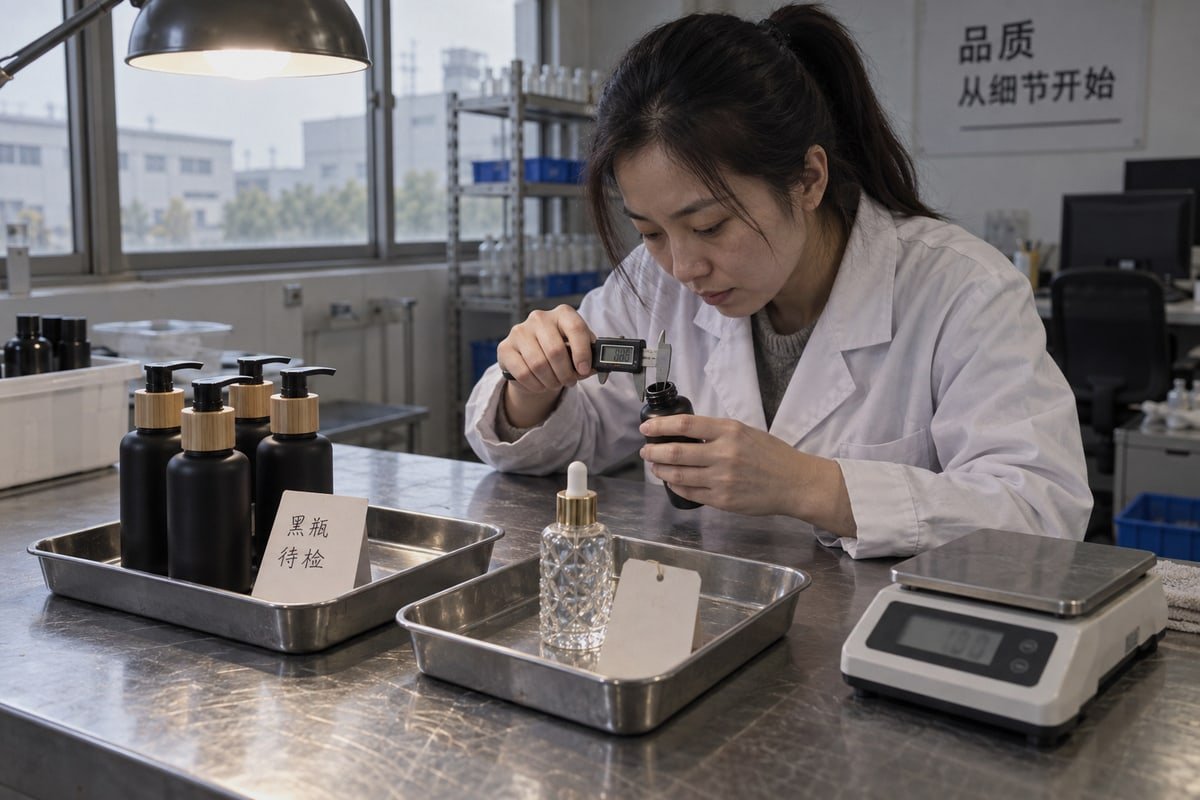
Leakage and returns are the two pain points I hear most from procurement managers. Both trace back to details that should have been caught at the sample stage. A sample is your one chance to test the bottle for free before thousands are made. Use it fully.
The sampling checklist
| Check | What to verify | Why it matters |
|---|---|---|
| Neck finish | Thread size and style, e.g. 18/410 or 24/410 | Wrong finish means the pump or cap will not seal |
| Brimful capacity | Measured fill volume vs. drawing | Affects label claims and dosing |
| Gram weight | Consistency across several samples | Thin spots cause cracking and leaks |
| Seal and torque | Cap applied at spec torque, inverted for hours | Simulates shipping stress |
| Compatibility | Fill with your actual formulation | Oils and actives can attack PET or the pump |
| Stress-cracking | Filled samples cycled through hot and cold | Reveals weak areas from the blow molding process |
| Color and clarity | Compare to approved swatch under daylight | PCR resin can shift toward yellow or gray |
| UV protection | Check additive spec if product is light-sensitive | Protects shelf life |
| Decoration | Print, label, and coating placement | Avoids mismatched artwork on bulk |
| Compliance | Request food-grade certification and resin data sheets | Needed for many US and EU customers |
Test with the real formulation
Do not fill samples with water. Fill them with the serum, lotion, or oil you plan to sell. Then store filled samples warm for a stretch and cold for a stretch. Look for whitening, cracking at the base, or pump failure. Our engineers have found that most compatibility problems appear within a few weeks of accelerated storage, well before a bulk order would ship.
Ask for PCR percentages if you use recycled resin
If your brand is moving to post-consumer recycled PET 4, request samples at the exact PCR percentage you intend to buy. Clarity and tint change with recycled content. A sample at 30 percent PCR will not tell you how 100 percent PCR looks. Compare against virgin PET side by side so you can decide what your brand accepts.
Lock a gold sample
Once everything passes, ask for a pre-production sample made on the actual mass-production mold. Sign it, photograph it, and have the supplier keep a matching one. This gold sample becomes the reference for every later quality control inspection and for any dispute. In our factory, the gold sample sits beside the line during production so inspectors compare against it, not against memory.
How long does the PET bottle sampling process take, and how can I avoid delays before mass production?
We learned the hard way that a sample approved by email with no signed spec sheet usually turns into a second revision round.
Stock PET bottle samples usually ship in about 2–7 days. Custom samples from existing molds take roughly 7–15 days, and new mold development with physical prototyping can take 15–30 days. To avoid delays, freeze the spec sheet early, limit sample rounds, prepay promptly, and use your own courier account.
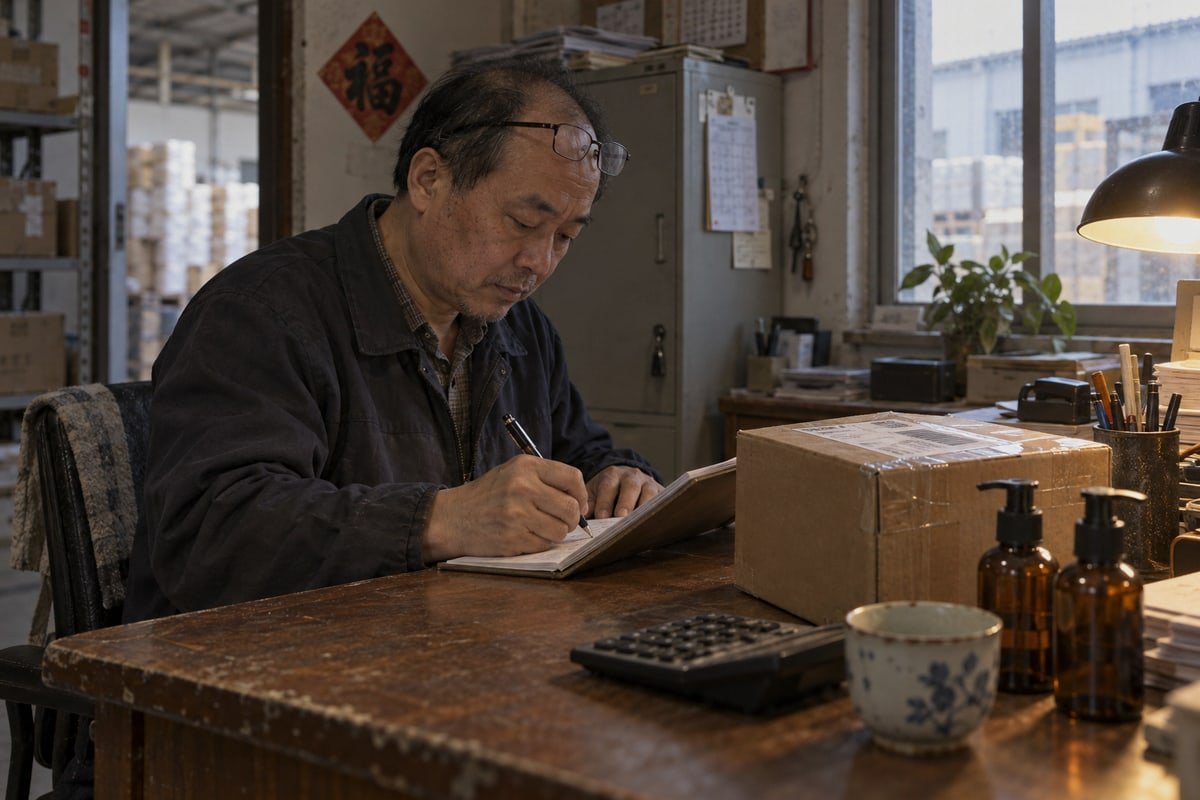
Delays are the pain point that costs brands the most. A late sample pushes a late approval, which pushes a late mass production lead time 5, which pushes a missed launch date. Most of that chain starts with an avoidable hold at the sample stage.
Lead time by sample tier
| Tier | Typical duration | What consumes the time |
|---|---|---|
| Stock sample | 2–7 days | Picking, packing, courier transit |
| Custom sample on existing mold | 7–15 days | Color matching, decoration, machine slot |
| New mold with prototype development | 15–30 days | Preform design, tooling, first trial, adjustment |
| Second sample round | Adds 5–15 days per round | Rework plus shipping again |
Shipping to Australia, Germany, or the US adds transit time on top of these numbers. Express courier is usually the difference between a one-week and a three-week wait.
The delays we see most often
- Spec changes after tooling starts. A capacity or neck change once the mold is cut means a new mold or a heavy modification.
- Slow fee payment. Many suppliers will not start a custom sample until the fee clears. A three-day payment gap becomes a three-day production gap.
- Unclear shipping responsibility. Waiting to agree on who pays courier charges can stall a finished sample on a shelf. Freight collect on your account removes that.
- Too many rounds. Each revision restarts the clock. Combine feedback into one consolidated list rather than sending comments one by one.
- Approval by vague email. "Looks good" is not approval. Sign the spec sheet and the gold sample.
How to keep the schedule tight
Plan sampling as part of your launch calendar, not as a step before it. Book the sample slot at the same time you set the target ship date. Ask the supplier how many days the mass production lead time will be after gold sample sign-off, and whether DDP delivery is available to your warehouse. When we run a custom project from Taizhou, we share a simple timeline: sample, feedback, revision if needed, gold sample, production, inspection, shipment. Buyers who follow that timeline rarely see surprises.
Conclusion
Sample fees look small, but a careless sample causes leaks, delays, and returns. Confirm type, fee, refund terms, and tests up front. Then order with confidence.
Footnotes
1. The ICC provides standards for international commercial contracts involving custom manufactured goods and samples. ↩︎
2. Wikipedia provides a technical overview of the blow molding process used to manufacture PET bottles. ↩︎
3. ISO provides international standards for quality management systems used in manufacturing inspections. ↩︎
4. The EPA provides information on recycled materials and the environmental impact of post-consumer plastics. ↩︎
5. The International Trade Administration provides resources on global manufacturing lead times and supply chain management. ↩︎
