
Electroplating is to directly electrodeposit one or more layers of metal coating on the surface of the workpiece to give the workpiece a beautiful appearance or specific functional requirements, whereas an anodizing shell involves a metal part cover on the workpiece. In other words, after the electroplating process is completed, the plastic part and the coating are a whole. However, anodizing shell and plastic parts are 2 parts.
- Electroplating Process
During electroplating, the coated metal or other insoluble materials are used as the anode, the metal products to be plated are used as the cathode, and the cations of the coated metal are reduced to form a coating on the metal surface. In order to eliminate the interference of other cations and make the coating uniform and firm, it is necessary to use a solution containing metal cations as an electroplating solution to keep the concentration of metal cations in the coating unchanged. The purpose of electroplating is to coat a metal coating on the substrate to change the surface properties or dimensions of the substrate. Electroplating can enhance the corrosion resistance of the metal (coated metal is mostly corrosion-resistant metal), increase hardness, prevent wear, and improve electrical conductivity, lubrication, heat resistance, and surface beauty.
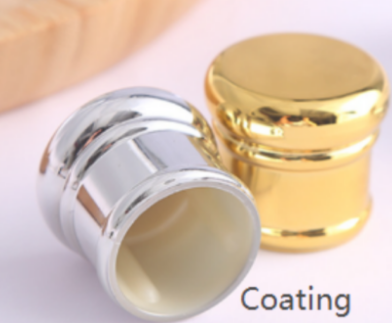
2. Anodizing Process We’ve talked about this in the past. Here it is: Anodizing Process
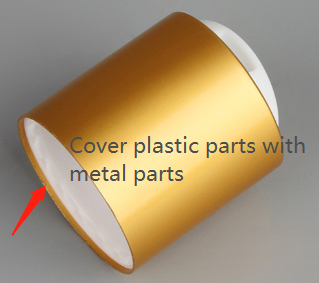
3. Cosmetic Packaging Application for electroplating:
In the cosmetic packaging industry, because the coating after electroplating cannot be in direct contact with the contents, the electroplating process is mainly applied to external components, such as various packaging shells lipstick shells, bottle cap shells, makeup tool components, and so on.
Electroplating has high requirements on the workpiece, such as PP material is difficult to produce good results, and it is easy to be corroded and peeled. For plastics, ABS is most commonly used because ABS can withstand plating temperatures of 60°C (140°F).
