
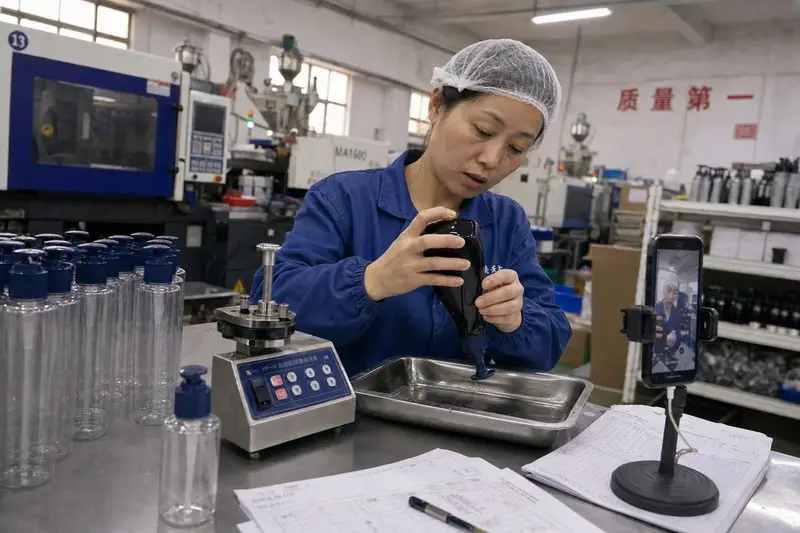
Choosing a cosmetic packaging supplier can make or break your launch. I have watched buyers lose entire seasons over one wrong choice, and it still frustrates me at our Taizhou factory.
Before choosing a cosmetic packaging supplier, ask about quality control protocols, product compatibility testing, OEM/ODM customization options, Minimum Order Quantity, production lead times, custom mold costs, DDP shipping capability, and how they prevent leakage, delays, and returns. Strong, documented answers signal a reliable partner.
The wrong questions get you a cheap quote. The right questions get you a partner. Below, I break down the four question areas that matter most, based on what our export customers ask us every week.
How Can I Verify a Cosmetic Packaging Supplier's Quality Control Standards?
A procurement manager from Australia once told me her previous pump bottles leaked in transit and ruined a retail launch. That single failure shaped how we run inspections today.
Verify quality control by requesting the supplier's documented QC process, AQL inspection levels, batch testing reports, and production photos. Ask how they check sealing, torque, color consistency, and leakage before shipment, and confirm they run product compatibility testing between your formula and the packaging material.

Trust is not a QC standard. Documents are. When I walk buyers through our production line, I show them checkpoints, not promises. You should demand the same from any cosmetic packaging supplier you shortlist.
The Three Inspection Stages You Must Ask About
A serious factory inspects at three points. First, incoming materials. Resin, glass, pumps, and springs get checked before they touch a machine. Second, in-process checks. Operators pull samples during molding and decoration to catch drift early. Third, final inspection. This is where AQL sampling happens before cartons are sealed.
Ask the supplier to define their Acceptable Quality Limits 1 for each defect class. If they cannot name their AQL levels, that is a warning sign.
| Defect Category | Example | Typical AQL Question to Ask |
|---|---|---|
| Critical | Leaking pump, failed seal | "What is your AQL for critical defects? It should be 0 or near 0." |
| Major | Wrong color, faulty spray pattern | "How do you sample and reject major defects?" |
| Minor | Small scratch, slight print misalignment | "What tolerance do you accept on minor cosmetic flaws?" |
Tests That Protect Your Formula
Packaging is not generic. A water-based serum, an oil-based cleanser, and an alcohol-heavy mist stress materials differently. Ask what product compatibility testing 2 the supplier runs or supports. Ask for leak tests, drop tests, torque tests on closures, and spray-count tests on atomizers. For refillable or complex dispensers, ask about cycle-life data. A pump rated for thousands of presses tells you the supplier tests durability, not just looks.
Also ask about color control. Batch-to-batch consistency matters when your glossy black bottle sits next to last quarter's stock on the same shelf. A supplier with a Delta E color tolerance and Pantone matching protocol 3 will say so quickly. One without will change the subject.
What OEM/ODM Customization Options Should I Ask My Supplier About?
Every week, buyers send us sketches of bottles that do not exist yet. Turning those sketches into molded reality is where OEM/ODM capability gets tested, and where many suppliers quietly fall short.
Ask about custom molds and tooling ownership, color matching, capacity changes, material choices, and decoration methods like hot stamping, frosting, spraying, and electroplating. Confirm sampling timelines, custom mold costs, Minimum Order Quantity per option, and whether the supplier offers structural design support, not just stock inventory.
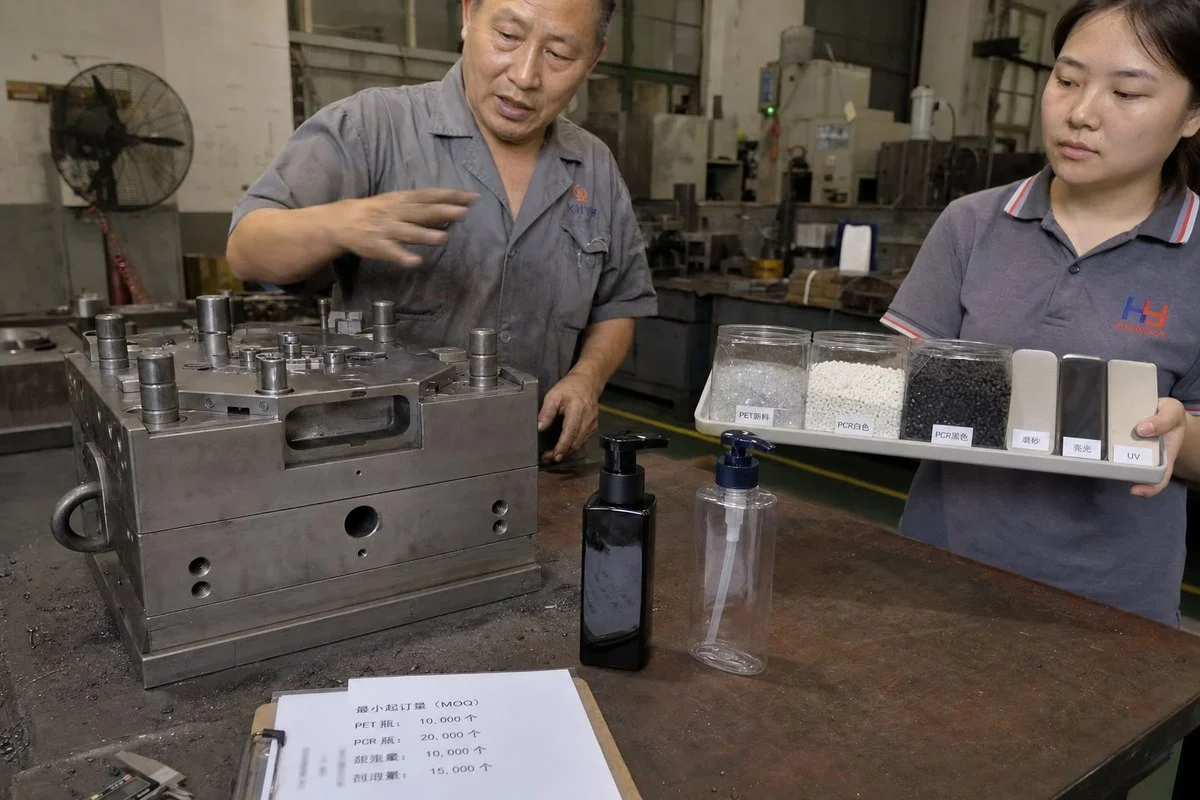
Customization is a spectrum. On one end, you pick a stock bottle and change the color. On the other end, you invest in a fully custom mold with a unique silhouette. Your questions should map that spectrum before you compare prices.
Match the Customization Level to Your Brand Stage
In my experience exporting to the United States, Germany, and Australia, startups and established brands need very different answers. A new brand usually wants low Minimum Order Quantity, fast prototyping and sampling, and stock shapes with custom decoration. A scaling brand cares about proprietary molds, advanced finishes, and consistency across a full product family.
| Customization Level | What It Involves | Key Questions to Ask |
|---|---|---|
| Stock + custom color | Pantone matching, spraying, frosting | "What is the MOQ per color? What is your color tolerance?" |
| Stock + decoration | Hot stamping, silk printing, electroplating, labeling | "Can I see finish samples? What are setup fees?" |
| Semi-custom | Modified capacity, custom cap or pump pairing | "Can one bottle family support 30ml, 50ml, and 100ml?" |
| Full custom mold | 3D modeling, new tooling, unique shape | "What are the custom mold costs, timeline, and who owns the tooling?" |
Ask Who Owns the Mold
This question saves brands from vendor lock-in. If you pay for tooling, get the ownership and transfer rights in writing. We support customization of colors, capacity, bottle materials, and outer packaging, and we always clarify tooling terms upfront, because unclear mold ownership is one of the most common disputes I hear about from buyers switching suppliers.
Also ask about functional customization. Airless bottle technology protects sensitive actives from oxygen. Fine-mist sprayers, treatment pumps, and droppers each change the user experience. A good supplier will recommend the dispensing system that fits your formula viscosity 4, not just the one they have in stock. And if sustainability matters to your market, ask which sustainable packaging materials, such as PCR resin or recyclable mono-material designs, are available for your chosen structure without hurting barrier performance.
How Do I Ensure My Supplier Can Meet My Shipping and DDP Logistics Needs?
Freight is where I have seen the most surprises. A buyer once compared our quote against a cheaper FOB offer, then discovered the "savings" vanished in destination charges, customs brokerage, and delivery fees she had to arrange herself.
Ask whether the supplier offers true DDP shipping to your door, including duties, customs clearance, and last-mile delivery. Confirm production lead times, freight options by sea and air, carton and pallet standards, transit insurance, and how they communicate tracking updates throughout the shipment.
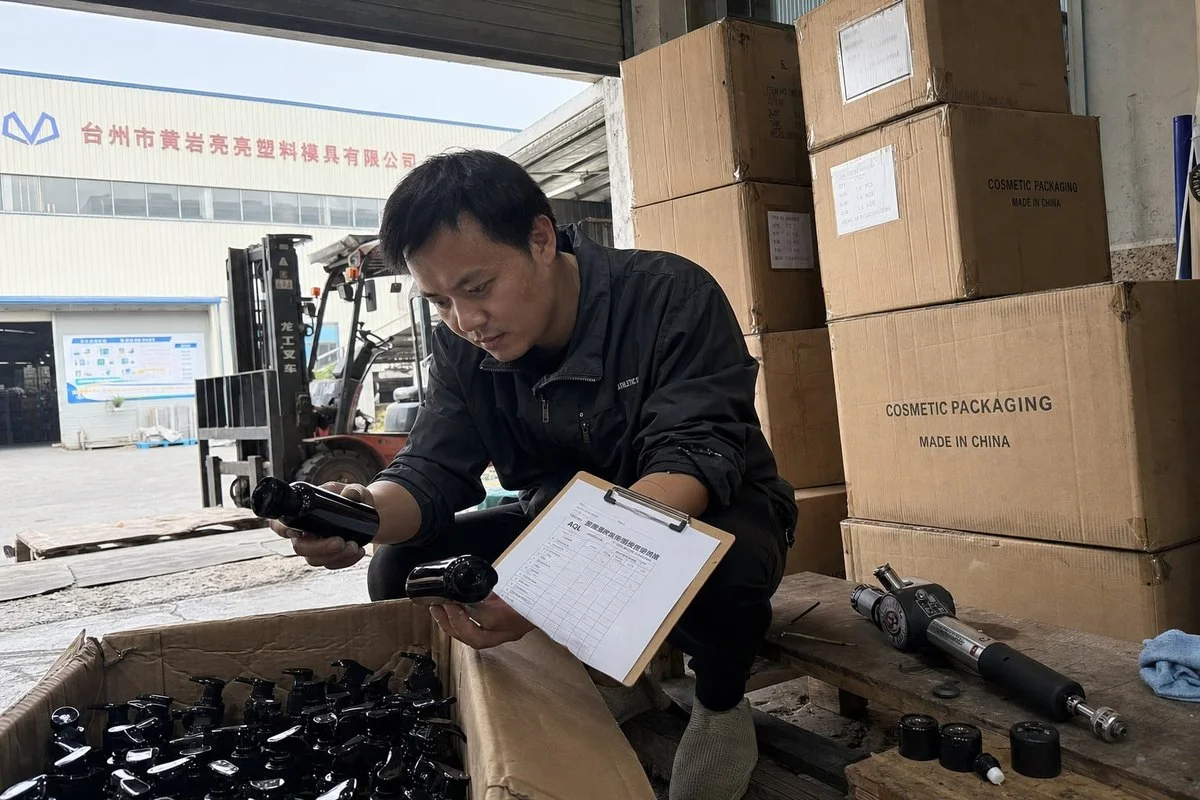
DDP means Delivered Duty Paid. The supplier handles everything until the goods reach your warehouse. That sounds simple, but the quality of DDP service varies widely. Your questions should expose the difference between a supplier who quotes DDP and one who actually manages it well.
The Logistics Questions That Reveal Real Capability
Start with lead times. Ask for separate numbers for sampling, tooling, bulk production 5, and transit. A supplier who blends these into one vague estimate is hiding risk. From our factory in Taizhou, Zhejiang, we quote each stage separately because buyers plan launches backward from a retail date, and each stage can slip independently.
Then dig into packing standards. Cosmetic packaging is fragile. Glossy black pump bottles scratch. Glass chips. Ask how bottles are protected inside cartons, whether cartons meet drop-test standards, and how pallets are wrapped for sea freight humidity.
Here is a simple comparison of the shipping terms you will encounter:
| Term | Who Handles Freight | Who Pays Duties | Your Risk Level |
|---|---|---|---|
| EXW | You, from the factory gate | You | Highest |
| FOB | You, from the port of origin | You | High |
| CIF | Supplier to your port, then you | You | Medium |
| DDP | Supplier, door to door | Supplier | Lowest |
Confirm Communication Before You Confirm Cargo
Ask who your contact person is during shipping and how updates arrive. Our Australian and German buyers prefer short WhatsApp updates with photos at loading. That habit came from experience. When buyers see sealed cartons, container numbers, and loading photos, disputes almost disappear. Also ask how the supplier handles port delays 6 or customs inspections. The honest answer is that delays happen. The right answer explains the backup plan.
What Should I Ask to Avoid Delays and Returns From My Packaging Supplier?
The most painful email I ever received was a leakage complaint with photos of ruined retail stock. We resolved it, but it taught me that prevention questions are worth more than compensation clauses.
Ask how the supplier prevents delays through capacity planning, raw material buffers, and stage-by-stage production updates. To avoid returns, confirm pre-shipment inspection rights, leak and drop testing, sealed sample agreements, regulatory compliance standards for your market, and a written defect-resolution policy.
Delays and returns share one root cause: assumptions that were never tested. The fix is a set of blunt, specific questions asked before you pay a deposit.
Questions That Prevent Delays
Ask about daily output capacity for your exact product. A factory can be huge overall but bottlenecked on the one decoration line you need. Ask what typically causes their delays. An honest supplier will name real causes, such as resin shortages, holiday shutdowns, or decoration rework. Ask how they communicate slippage. Weekly production photos and a shared timeline beat a silent factory every time.
Ask about scalability too. If your first order sells out, can the supplier double the next run without doubling the production lead times? Wholesale pricing structures should also improve as volume grows, so request tiered quotes upfront.
Questions That Prevent Returns
Follow this sequence before every bulk order:
- Approve a golden sample and have both sides keep a sealed reference.
- Confirm the supplier runs leak, torque, and drop tests on your specific bottle-and-pump combination.
- Verify regulatory compliance standards 7 and documentation for your target market, whether that is the US, EU, or Australia.
- Reserve the right to a third-party pre-shipment inspection at your cost.
- Get the defect-resolution policy in writing, including replacement terms and timelines.
When we onboard a new brand owner, we walk through this exact sequence. Buyers who skip step one or step five are the ones who end up in disputes. Buyers who follow all five almost never file a claim, because problems get caught at the sample or inspection stage, not at their warehouse door.
Conclusion
The wrong supplier costs you launches, refunds, and reputation. The right questions expose the difference early. Ask about QC, customization, DDP logistics, and prevention, then choose the partner who answers with proof.
