
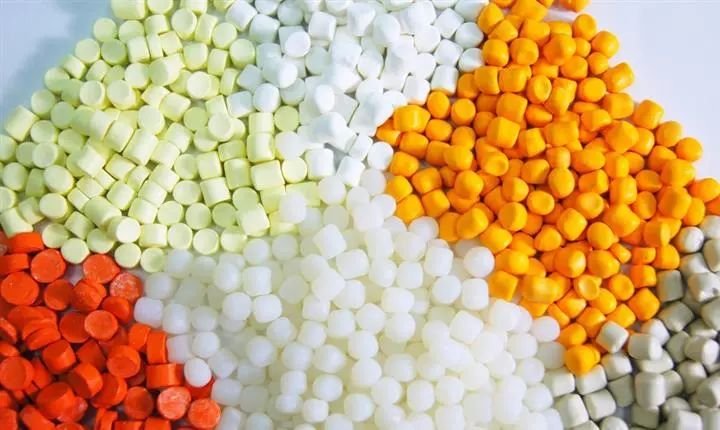
1. Low density polyethylene (LDPE, LLDPE)
Polyethylene is a white waxy solid, translucent, almost odorless and non-toxic. The flexibility of polyethylene macromolecular chain is good, it is easy to crystallize, and polyethylene is composed of partially crystalline and partially in a high elastic state at room temperature.
- LDPE Performance characteristics
Low density polyethylene has good processing performance and good transparency, but poor air tightness, low tensile strength, low heat resistance temperature, chemical resistance, solvent resistance is not as good as high density polyethylene, and easy to absorb fat swelling, making products sticky.
- LDPE Scope of application
Blow molded bottles and extruded hoses are used for condiments, medicines and other packaging; Bottle caps, stoppers and other container accessories; A variety of packaging films, containers and foam buffer materials.
- LLDPE Performance characteristics
The impact strength and stress cracking resistance are similar to that of high-density polyethylene, while the transparency, hardness and processability are between high-density and low-density polyethylene. Elongation and puncture resistance are the best among all kinds of polyethylene.
- LLDPE Applicability
It is especially suitable for packaging film, and its thickness is 20% thinner than low-density polyethylene, which is a promising plastic packaging material.
2. High density polyethylene (HDPE)
- Performance characteristics
Good strength and heat resistance, the highest temperature can reach 120℃, poor transparency, elasticity and processing performance, poor gas resistance, low gloss, surface treatment before printing.
- Scope of application
Containers, pallets, large buckets for fresh milk, chemical products and other turnover packaging, bottles for yogurt, washing liquid bleach packaging, bottle caps, bottle stoppers and other container accessories
3. Foamed polyethylene – EPE (commonly known as pearl cotton)
Divided into sheet, sheet, pipe, bar and its slice modeling.
- Scope of application
Widely used for packaging any shape of goods, especially electronic products such as: computer, TV, audio, speakers and other electrical anti-static buffer packaging. Pearl cotton is an environmentally friendly type, characterized by good elasticity and strong toughness. Also can make life jacket, float board, travel bag, hat and so on.
4. Polypropylene (PP)
- Performance characteristics
Polypropylene is the lightest of general plastics, its heat resistance is the highest in general plastics, and it can be used for a long time at 100 ° C ~ 120 ° C. High crystallinity, tensile strength and hardness are better than polyethylene, moisture resistance, water resistance and prevent odor transmission is better, can be heat sealed. Excellent bending fatigue strength, resistance below 80℃ acid, alkali, salt solution and most organic solvents such as polypropylene packaging box to take advantage of this feature.
Cold resistance, poor aging resistance, poor air tightness, not suitable for use at low temperatures, and easy to be affected by light and oxygen. Surface treatment must be applied before bonding or printing.
- Scope of application
Widely used in the production of food, chemical products, cosmetics, food and beverage, beer and other turnover boxes, blow molded bottles for shampoo, cosmetics and other packaging, screw caps or hinged packaging, woven bags and packaging films, packaging belts and foam buffer materials.
5. Polystyrene (PS)
- Performance characteristics
Colorless and transparent, tasteless and non-toxic, good coloring and printability, low water absorption, good dimensional stability, rigid and non-malleable. Resistant to organic acid, alkali, salt, low alcohols and their aqueous solutions, low impact strength, small surface hardness, easy to scratch and wear; It has poor moisture resistance and heat resistance, and is easily softened by the segmentation of many hydrocarbons, ketones and advanced fatty acids.
- Scope of application
Widely used in the production of food, medicine and daily necessities and other small packaging containers, such as boxes, cups, etc., and food packaging film. In addition, it is also widely used in the production of foam buffer materials, etc., for cushioning and shock-proof packaging of instruments, meters, electrical products, etc.
6. Polyvinyl chloride (PVC)
- Performance characteristics
Good rigidity and hardness, poor heat resistance, transparency up to 76% ~ 82%. Excellent mechanical strength, wear resistance, pressure resistance, moisture resistance, water resistance and good air tightness, can be heat-sealed. Excellent printing performance and flame resistance. Resistant to strong acids, strong alkalis and non-polar solvents, vulnerable to the erosion of polar organic solvents, containing toxic vinyl chloride monomers, and the plasticizers, stabilizers used are mostly toxic substances, so the PVC used for food and pharmaceutical packaging should use non-toxic additives, and the content of vinyl chloride monomers does not exceed 1ppm.
- Scope of application
Manufacture rigid packaging containers, transparent sheets and soft packaging films. PVC transparent sheets are thermoformed into various packaging containers, which are widely used in food and pharmaceutical packaging. In addition, polyethylene can also be made into foam and buffer materials.
7. Polyethylene terephthalate (PET)
- Performance characteristics
Mechanical strength is very good, with good hardness, wear resistance and folding resistance, good heat resistance, cold resistance, good moisture resistance, air tightness and excellent prevention of odor transmission, resistance to weak acid, weak alkali and most solvents, good oil resistance, suitable for printing, not resistant to strong alkali, strong acid, chlorinated hydrocarbons also have an erosion effect on it; It is easy to carry static electricity, and there is no appropriate method to prevent static electricity, and the heat sealing performance is poor; The price is expensive.
- Scope of application
Mainly used for the production of packaging containers and films, because of its good air tightness, heat resistance and cold resistance, so polyester film is suitable for frozen food and cooking food packaging. Polyester bottles are widely used in beverage packaging.
8. Polyvinylidene chloride (PVDC)
- Performance characteristics
Slightly light brown strong material, strong crystallization, water vapor, gas permeability has very good air tightness and moisture resistance. Polyvinylidene chloride has good mechanical strength, strong acid, strong alkali and organic solvents, excellent oil resistance, self-adhesive, difficult to burn and have spontaneous combustion, poor aging resistance, easy to be affected by ultraviolet light, easy to decompose hydrogen, and its monomer is also toxic. Therefore, quality standards should be strictly controlled for food packaging.
9. Polyamide (PA)
- Performance characteristics
Tough, not very transparent horny material, odorless and non-toxic, burning when the smell of wool burnt.
Strong crystallization, high melting point, oil resistance, resistance to general solvents, excellent mechanical properties. The expansion strength and impact strength are obviously better than the general plastic, good wear resistance, self-lubrication, and has a high bending fatigue strength, low temperature resistance is good, but high temperature stability is poor. Better air tightness than polyethylene, polypropylene, alkali and dilute acid resistance, no static electricity, good printing performance. Strong water absorption, large moisture permeability, poor dimensional stability at high temperature, after water absorption, the air tightness drops sharply, nylon is not resistant to formic acid, phenol and alcohol, concentrated alkali also has an erosion effect on it.
- Scope of application
It is mainly used for the flexible packaging of food, especially for the packaging of greasy food. Nylon containers are also commonly used for chemical reagent packaging.
10. Polyvinyl alcohol (PVA)
- Performance characteristics
Generally does not have water resistance, but by heat treatment, aldehyde treatment or the use of appropriate organic matter to make the molecular chain crosslinking method, it can make water resistance. It has good transparency and toughness, tasteless and non-toxic, excellent air tightness and fragrance preservation, good mechanical strength, excellent stress cracking resistance, chemical resistance and oil resistance, no static electricity, good printing performance, and thermal sealing. Large water absorption, moisture permeability, easy to be eroded by alcohols, esters and other solvents.
- Scope of application
For food packaging, water-based polyvinyl alcohol can be used for metering packaging of chemicals.
11. Ethylene vinyl acetate copolymer (EVA)
- Performance characteristics
The stress cracking resistance, cold resistance, aging resistance and low temperature heat bonding property are better than polyethylene, and the corrosion resistance of strong alkali and weak acid is poor. Poor moisture resistance of low density polyethylene, and poor air tightness; Poor heat resistance; Easy to be eroded by organic solvents such as strong acids, soluble in aromatic hydrocarbons or substituted hydrocarbons; Poor oil resistance.
- Scope of application
For the production of packaging film, because of its good elasticity, it is suitable for the wrapping of pallets. Because of its excellent low temperature heat sealing property, it is commonly used as a sealing layer of composite films, and is also used to make packaging containers for medicines and food.
12. Polycarbonate (PC)
- Performance characteristics
Colorless, transparency up to 80% ~ 90%, refractive index of about 1.59, suitable for optical materials, with good moisture resistance and air tightness, excellent fragrance protection and heat and cold resistance, with outstanding impact toughness, no notch impact strength in the thermoplastic highest. Small shrinkage, low water absorption, good dimensional stability, no static electricity, excellent insulation properties, resistance to dilute acid, oxidant, reducing agent, salt, aliphatic hydrocarbons, good oil resistance. Easy to produce stress cracking phenomenon; Poor bending fatigue strength; Poor heat sealing; It is not resistant to alkali, ketones, and aromatic hydrocarbons, swelling in many organic solvents and causing stress cracking.
- Scope of application
Mainly used for electrical insulation materials, in the packaging is mainly used for food packaging, has good wear resistance, suitable for hardware, sharp items packaging.
13. Polyurethane (PU)
- Performance characteristics
Excellent elasticity, meet the requirements of density, softness, elongation and compression strength, good chemical stability, resistance to many solvents and oils, wear resistance than natural sponge 20 times larger, excellent insulation, sound insulation, shock-proof and bonding, high price.
- Applicability
Shock-proof packaging or cushioning materials for precision instruments, valuable instruments, handicrafts, etc.
14. Phenolic plastic (PF)
- Performance characteristics
High mechanical strength, wear resistance and excellent electrical insulation properties, high temperature resistance, not easy to deformation, resistance to some dilute acids, good oil resistance, poor elasticity, brittleness, product color is darker, mostly black or brown, can not get colorless products, strong alkali and oxidizing acid can make it decompose, with mild toxicity.
- Scope of application
Widely used as electrical insulation material. Its application in packaging is mainly used to make bottle caps, boxes and acid-resistant containers for chemical products. Caps made of phenolic plastic can withstand the torque of the capping machine and remain sealed for a long time without loosening.
15. Urea-formaldehyde Plastics (UF)
- Performance characteristics
The surface hardness is large, has good luster and suitable translucency, its coloration is good, can be made into a variety of good appearance and bright colored products, not easy to absorb dust, has good electrical insulation, chemical stability, does not interact with any organic solvent, good grease resistance, poor water resistance, easy to absorb water deformation, can not be sterilized with steam, impact strength is also slightly insufficient, Resistant to alkali and strong acid attack.
- Scope of application
Used to make delicate packaging boxes, cosmetic containers and bottle caps. Because when soaking in acetic acid or 100℃ boiling water, there are free toxic substances formaldehyde precipitation, so it is not suitable for packaging food.
16. Melamine plastic (MF)
- Performance characteristics
High strength, not easy to deform, smooth and hard surface, appearance like ceramic, tasteless and non-toxic, good coloring, can be made into a variety of colorful products. Good heat resistance, water resistance, boiling water resistance, acid resistance, alkali resistance, grease resistance.
- Scope of application
The price is better, more used to make food containers, can also be used to make beautiful food packaging containers.
17. PVC heat shrink film
PVC heat shrinkable film, divided into ordinary packaging film, color printing film two.
Ordinary packaging film: suitable for all kinds of product packaging and combined packaging. The product features: good transparency, strong shrinkage, easy to operate.
The packaged product can be sealed against moisture, insulation, bright, strong and beautiful. Color printing film, in addition to a variety of color printing labels, but also suitable for product bottles, box packaging rotary sealing heat seal.
18. POF heat shrink film
POF shrink bag environmental protection, vertical and horizontal shrinkage effect is good, mainly used for gifts, stationery, hardware and other lighter items shrink packaging.
19. PET heat shrink film
Produced by “polyester resin slice”, it is an internationally recognized “environmentally friendly” heat shrink packaging material. Its technical indicators, physical properties, application range and use method are close to “PVC” heat shrink film.
With the improvement of people’s environmental awareness, domestic products are gradually moving to the demand of the international market, and the current “PET” heat shrink film is the most ideal packaging material to replace “PVC”.
20. PE heat shrinkable film
PE shrinkable film is divided into two types: simple pack type and single sheet type, which is suitable for automatic packaging of all kinds of products. The product features: good toughness, not easy to break, can replace carton packaging.
