
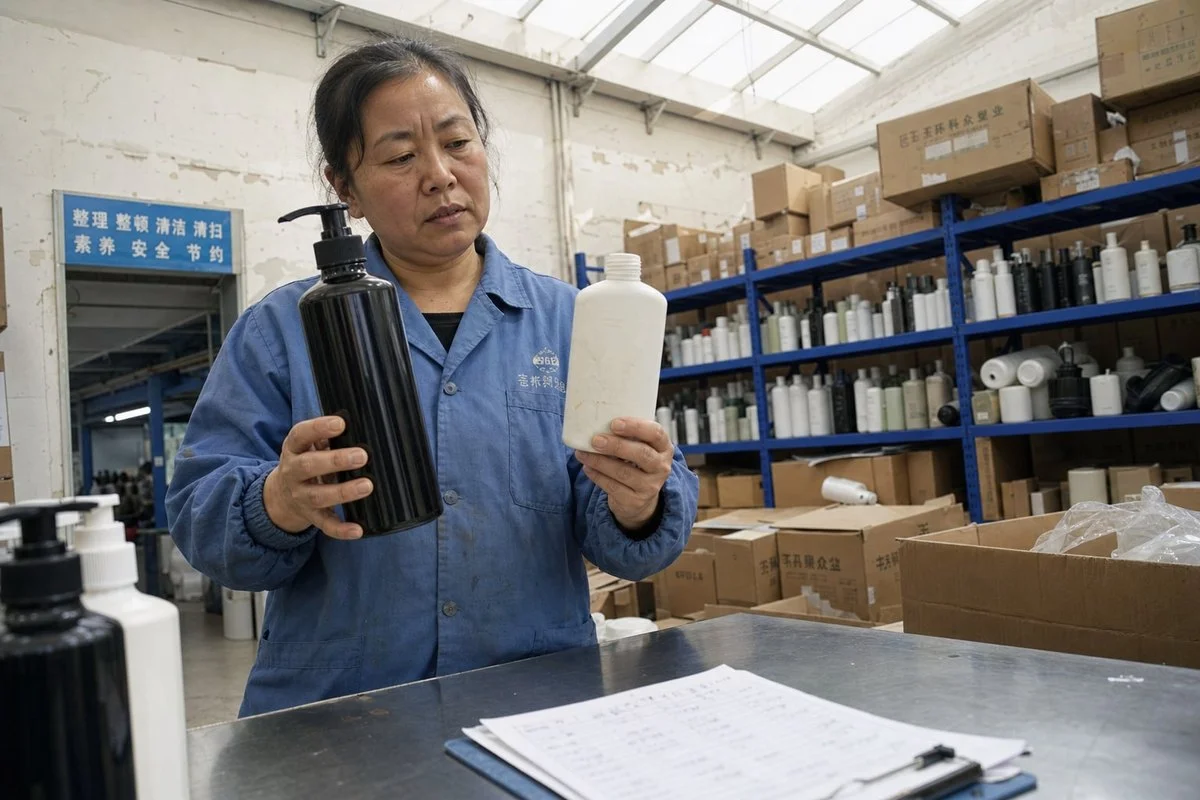
Choosing between PET vs HDPE bottles stalls many packaging projects on our production line. Pick wrong, and you face leaks, cracked bottles, and costly returns.
Neither PET nor HDPE is universally better for cosmetic packaging. PET wins on clarity, premium shelf appeal, and recyclability, making it ideal for toners and serums. HDPE wins on chemical resistance, squeeze flexibility, and impact durability, making it ideal for shampoos, lotions, and surfactant-heavy formulas.
The right answer depends on your formula, your brand image, and your budget. Let me walk you through each factor so you can decide with confidence.
How Do I Know If PET or HDPE Is More Durable for My Cosmetic Products?
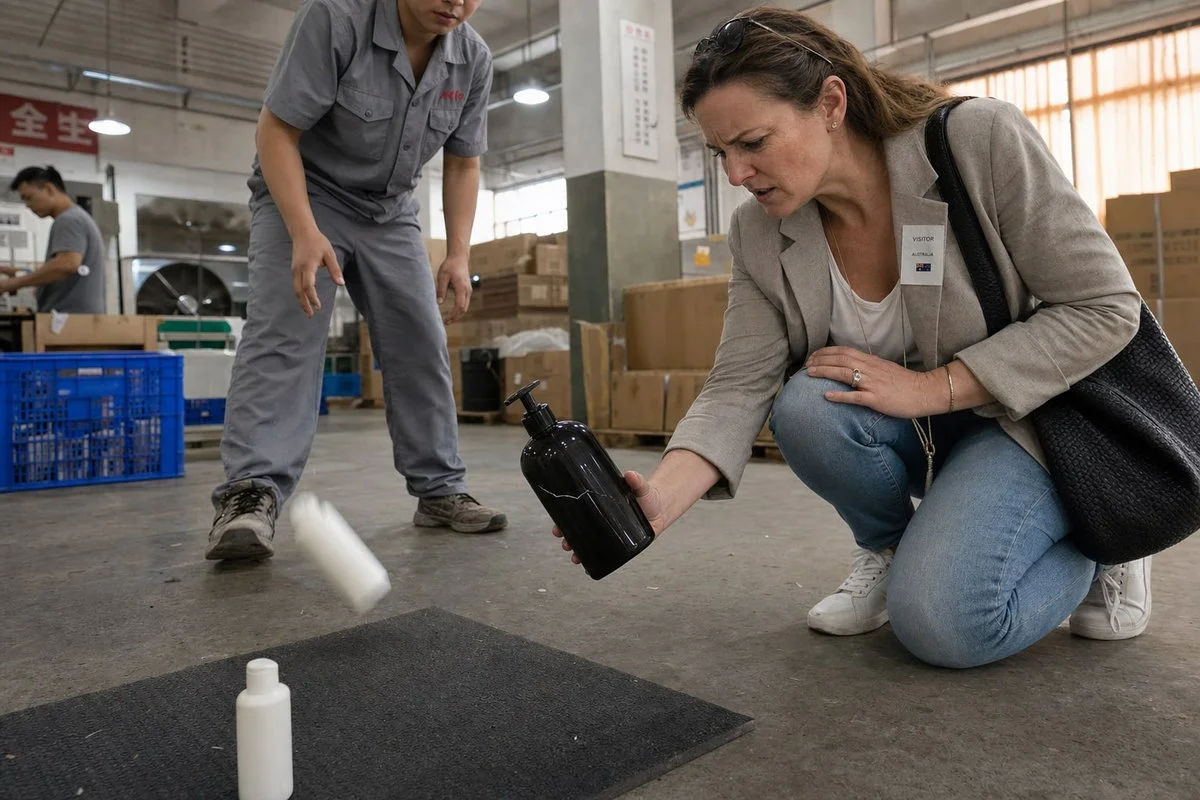
Last year, a drop test on our factory floor surprised a visiting buyer. Her rigid PET bottle cracked at the shoulder, while the flexible HDPE sample bounced back untouched.
HDPE is more impact-resistant and flexible, so it survives drops, squeezing, and rough transit better. PET is stiffer and more scratch-prone but holds its shape precisely. Choose HDPE for squeeze bottles and heavy handling; choose PET for rigid, dimensionally stable packaging.
Durability means different things depending on how your product lives its life. So let us break it down into the two kinds of toughness that matter for cosmetic bottles.
Rigidity vs Flexibility
PET is a semi-crystalline polyester 1. Its tensile strength sits around 75–85 MPa, much higher than HDPE at roughly 20–37 MPa. That makes PET stiff. A PET bottle keeps its shape, supports thinner walls, and looks crisp on a shelf. But stiffness has a downside. When a rigid bottle takes a hard hit, the energy has nowhere to go, and the wall can crack.
HDPE is a linear polyolefin 2. Its molecular chains pack tightly but flex under stress. So an HDPE bottle deforms on impact and then springs back. This impact resistance is exactly why shampoo bottles in slippery shower environments are almost always HDPE.
Durability in Real Use
| Durability Factor | PET | HDPE |
|---|---|---|
| Impact resistance | Moderate; can crack on hard drops | Excellent; flexes and rebounds |
| Squeeze fatigue | Develops micro-stress cracks over time | High fatigue resistance; ideal for refillables |
| Surface scratching | Scratches show on glossy clear walls | Opaque surface hides scuffs well |
| Shape retention | Excellent dimensional stability | Slight paneling possible with hot filling |
| High-speed filling lines | Needs careful handling | Very forgiving |
In our experience shipping to Australia and the US, transit abuse matters as much as consumer use. Sea freight containers get hot, pallets shift, and cartons get stacked high. For squeeze-format lotions and cleansers, we steer buyers toward HDPE. For pump bottles like our glossy black 500ml cylinder, PET rigidity actually helps, because the pump mechanism needs a stable neck and body that will not flex during dispensing.
One more point on longevity. If you are planning a refillable line, HDPE handles repeated squeezing across multi-year reuse cycles far better than PET.
Which Material Should I Choose to Avoid Leakage Issues During Shipping?
A procurement manager once messaged me on WhatsApp with photos of an essential-oil cleanser that had softened its PET bottles mid-ocean. That claim taught us to always run compatibility checks first.
To avoid shipping leaks, match the material to your formula's chemistry. HDPE resists essential oils, surfactants, alcohols, and high-pH ingredients that can weaken PET walls and seals. For water-based, stable formulas, PET seals reliably. Always run product compatibility testing before mass production.
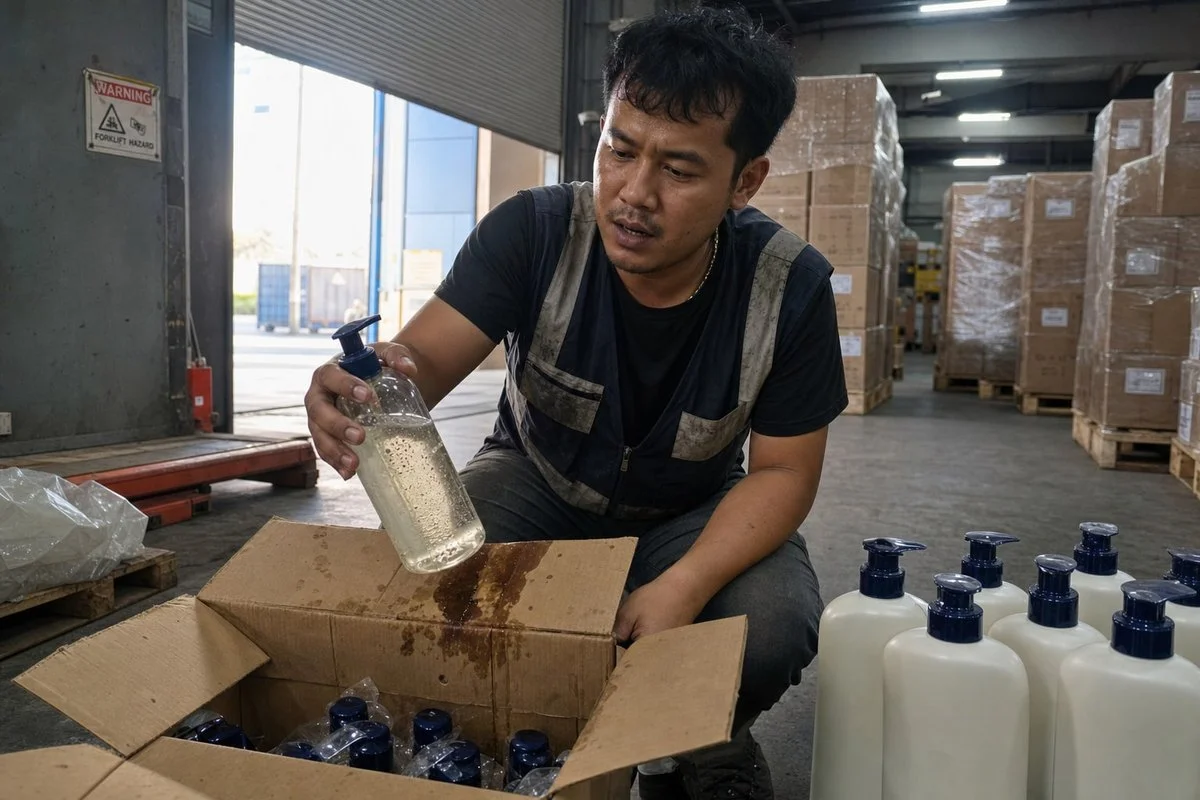
Leakage rarely comes from one single cause. It usually comes from a chain of small mismatches: formula versus resin, cap torque versus liner, and altitude or heat versus headspace. Let me separate these so you can attack each one.
Chemical Compatibility Comes First
HDPE offers superior chemical resistance. It shrugs off surfactant-heavy shampoos, body washes, essential oils, and even strong acids and bases. PET, by contrast, can suffer from stress cracking 4 or wall softening when it meets aggressive solvents, high alcohol content, or concentrated fragrance oils. There is also a subtler risk with PET called fragrance scalping, where the plastic slowly absorbs aromatic molecules and shifts your scent profile during long shelf life.
PET still performs very well with water-based toners, micellar cleansers, and standard serums. Its low gas permeability actually protects those formulas from oxidation, which supports shelf life stability.
Barrier and Seal Factors
| Leak Risk Factor | Better Choice | Why |
|---|---|---|
| Essential oils or solvents | HDPE | Chemical resistance prevents wall degradation |
| Oxygen-sensitive water formulas | PET | Stronger oxygen barrier limits oxidation |
| Thick anhydrous balms and oils | HDPE | Better moisture barrier properties |
| Air freight pressure changes | Either, with proper liner | Induction seals and correct torque matter most |
| Hot climates in transit | HDPE | Higher tolerance to formula-resin interaction |
A Simple Pre-Shipment Process
- Fill sample bottles with your actual formula, not water.
- Store them at elevated temperature for four to six weeks.
- Check for wall softening, paneling, weight loss, and odor change.
- Verify cap torque and liner compression on filled units.
- Run inverted and vibration tests to simulate transit.
At our Taizhou facility, we build this compatibility stage into every OEM project before tooling confirmation. It adds a few weeks upfront, but it prevents the returns and QC disputes that hurt far more later. If you ship DDP to markets like the US or Germany, one leaking pallet can wipe out the margin on an entire order.
Can I Get the Same Level of Customization with PET as I Can with HDPE?
Color matching is a daily conversation in our workshop. When we developed a fan of travel atomizers in magenta, teal, coral, and dusty rose, both resins were on the table.
Yes, both PET and HDPE support extensive customization in color, capacity, shape, and decoration. PET excels at glass-like clarity, gloss, and crisp geometry via injection stretch blow molding. HDPE excels at opaque colors, soft-touch finishes, and flexible squeeze formats. Your desired aesthetic decides the material.
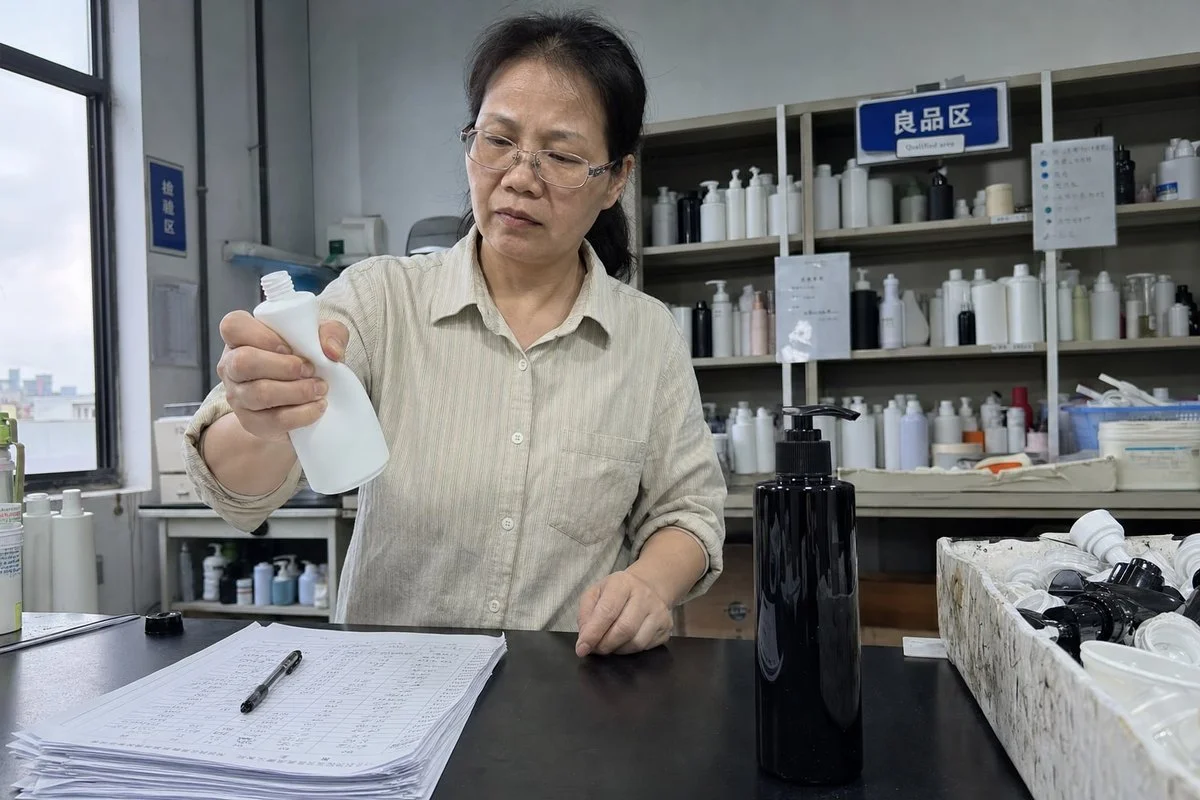
Customization is where the two resins reveal their personalities. Neither one is more customizable overall, but each is easier to customize in a particular direction.
What PET Does Best
PET is the clarity champion. Through injection stretch blow molding 5, we produce crystal-clear walls with a high-gloss finish that shows off the color and texture of a serum or toner. Buyers who want a "show the formula" look almost always land on PET. It also takes transparent tints beautifully, think smoked amber, ocean blue, or blush pink, while still letting light pass through. Because PET is rigid, it holds sharp shoulders, precise neck finishes, and thin walls, which lowers shipping weight.
There is one caveat. Clear PET offers little UV protection on its own. For light-sensitive actives like Vitamin C or Retinol, we add UV-inhibitor additives or recommend deeper tints.
What HDPE Does Best
HDPE is naturally opaque or translucent. That opacity gives inherent UV protection, hides fill lines, and masks the grey or yellow tints found in post-consumer recycled plastic 6, so high-PCR bottles still look consistent. HDPE also takes matte and soft-touch finishes very well, and it is the natural base for squeezable tottles and tubes.
Customization Comparison
| Customization Option | PET | HDPE |
|---|---|---|
| Transparent and tinted colors | Excellent | Limited (translucent only) |
| Opaque solid colors | Good | Excellent |
| Glossy premium finish | Excellent | Good |
| Matte / soft-touch finish | Good | Excellent |
| Squeeze formats | Poor | Excellent |
| High-PCR content with consistent color | Challenging | Easy |
| Decoration (silkscreen, hot stamp, labels) | Excellent | Excellent |
At Epochbottle we customize colors, capacity, bottle materials, and outer packaging on both resins, so the honest answer is that your brand vision should lead. A luxury black pump bottle reads premium in glossy PET. A spa-style lotion tottle feels right in matte HDPE.
Which Option Offers Better Value for My Brand's Long-Term Packaging Costs?
Budget conversations with procurement managers usually start with unit price and end somewhere very different. The cheapest bottle on a quote sheet is rarely the cheapest bottle over a three-year contract.
Long-term value depends on total cost, not resin price. PET allows thinner walls and lighter shipping, and its wider recycling stream classification strengthens sustainability claims. HDPE reduces breakage losses, returns, and compatibility failures. Calculate freight, defect rates, and PCR goals together before choosing.
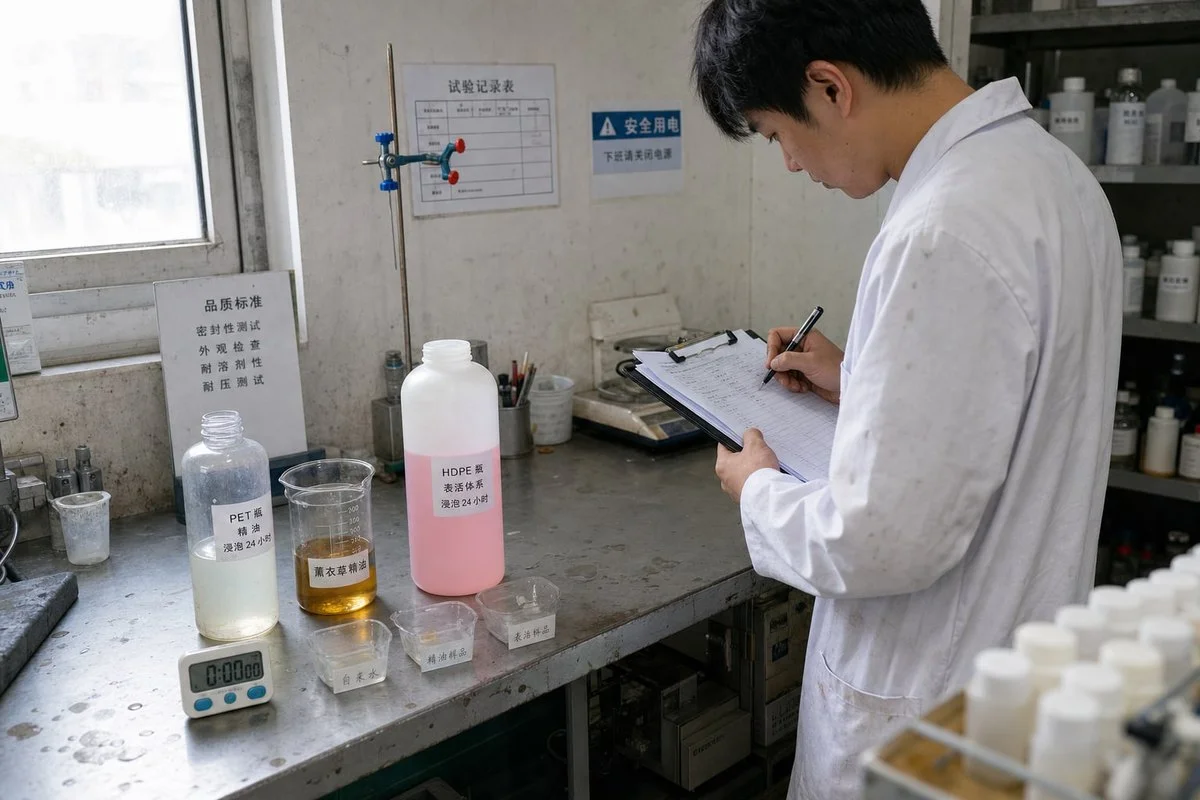
Let me unpack the cost picture the way we present it to buyers during quotation.
Beyond the Unit Price
Resin prices fluctuate, and PET and HDPE often sit close together per bottle at typical cosmetic capacities. The real gaps appear downstream. PET's rigidity supports thinner walls at the same strength-to-shape ratio, which trims material use and shipping weight per pallet. For brands importing full containers to Australia or Germany, that weight saving compounds across every shipment.
HDPE saves money in a different column. Its impact resistance means fewer cracked bottles on high-speed filling lines and fewer transit losses. If your history includes leakage claims or returns, that resilience is worth real money. HDPE's chemical resistance also lowers the risk of a mid-lifecycle packaging failure, the kind that forces an emergency re-tooling and a product recall.
Sustainability as a Cost Factor
Recycling now carries commercial weight. PET carries recycling code 1 7 and benefits from the most robust global collection infrastructure, often achieving higher recovery rates than HDPE at code 2. That makes PET easier to position in consumer-facing sustainability stories. On the other hand, HDPE handles high percentages of post-consumer recycled plastic more gracefully, because its opacity hides recycled-material discoloration. Where recycled-content mandates apply, that can make high-PCR HDPE cheaper to execute at consistent quality.
A Practical Value Checklist
- Estimate freight cost per thousand units for each material.
- Factor historical breakage and return rates into landed cost.
- Price the PCR percentage your target market requires.
- Include compatibility testing and any UV additive costs.
- Compare tooling amortization if you need custom molds.
When we quote OEM projects from Taizhou, we run this exact exercise with buyers. In many cases, the "more expensive" bottle wins once defects and freight enter the math.
Conclusion
PET showcases your formula; HDPE protects it. Match resin to chemistry, test before shipping, and count total costs, and your cosmetic packaging choice becomes simple and safe.
