

Choosing between glass and plastic cosmetic packaging can stall an entire product launch. I have watched buyers freeze at this decision on our production floor in Taizhou, losing weeks while compet 1itors shipped.
B2B buyers should choose glass cosmetic packaging for premium positioning, sensitive active formulas, and sustainability-led branding. Choose plastic for lower landed cost, lighter freight, breakage resistance, and lower MOQ risk. The right material depends on your formula, sales channel, budget, and brand stage—not personal preference.
Let me break this decision down the way I walk our own clients through it. We will look at product protection, shipping economics, brand image, and customization options one by one.
How do I decide which material best protects my product's shelf life and quality?
A German skincare client once sent us a vitamin C serum sample that had turned orange inside a PET bottle. That single failed batch taught her more about barrier properties than any brochure could.
Match the material to your formula's sensitivity. Glass is chemically inert and blocks oxygen and moisture, so it protects actives like retinol, vitamin C, and essential oils. Plastic works well for stable formulas such as shampoos, lotions, and cleansers where breakage resistance matters more than barrier strength.

Shelf life stability starts with chemical compatibility. Glass does not react with your formula. It does not absorb fragrance. It does not leach plasticizers into your product. That is why almost every serum dropper we produce for export markets is glass. Plastic, by contrast, is permeable to some degree. Oxygen and moisture can slowly pass through the bottle wall. For a shampoo, this does not matter. For a preservative-free facial oil, it can shorten shelf life by months.
When glass is the safer choice
In our experience supplying brands in the United States and Australia, glass wins whenever the formula contains sensitive actives, high oil content, or strong essential oils 2. Glass also handles hot-fill processes for balms and waxes without warping. It supports high-heat sterilization, which matters for ultra-clean or preservative-free lines.
When plastic is fully sufficient
Water-based lotions, body washes, hand soaps, and hair care are stable in PET or HDPE. Adding a UV inhibitor or an opaque finish closes most of the gap. Airless pump systems in plastic can even outperform standard glass jars for oxidation-prone creams, because they eliminate air contact entirely.
| Formula type | Recommended material | Why |
|---|---|---|
| Vitamin C / retinol serums | Glass (amber or opaque) | Inert, strong oxygen and UV barrier |
| Facial oils, essential oil blends | Glass | No absorption or leaching |
| Lotions, creams (stable) | Plastic or airless plastic | Adequate barrier, drop-safe |
| Shampoo, body wash | Plastic (PET/HDPE) | Wet-zone safety, durability |
| Hot-fill balms and waxes | Glass | Thermal stability at filling temperature |
Ask your supplier for a compatibility test before committing to tooling. We run fill tests for clients at our factory precisely because a leaking or discolored batch costs far more than a sample run.
What should I consider about shipping costs and breakage risks with glass versus plastic?
Freight quotes tell only half the story. When we ship DDP to Australia, the numbers that surprise buyers most are never the unit prices—they are the weight surcharges and the breakage allowances.
Calculate total landed cost, not unit price. Glass is roughly 3–5 times heavier than plastic, raising freight and protective packaging costs, and it carries real breakage risk in transit. Plastic cuts shipping weight, survives drops, and reduces replacement orders, insurance claims, and fulfillment losses.
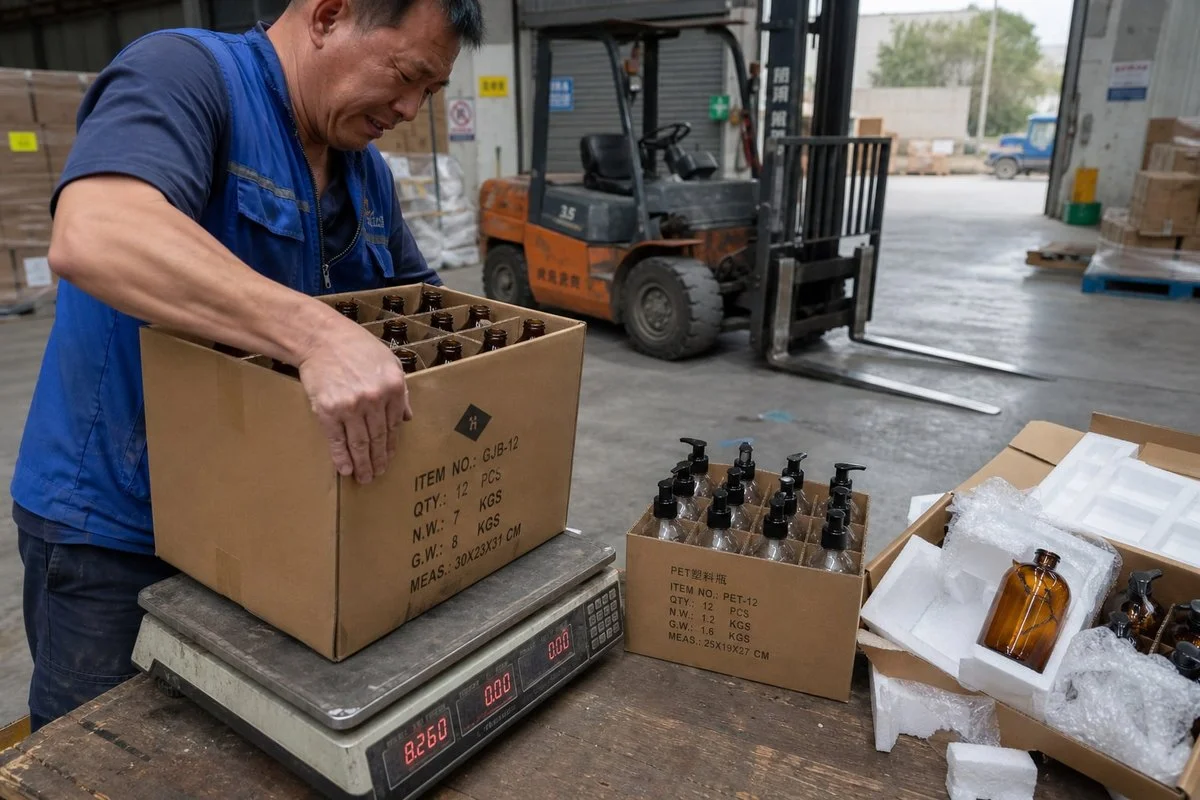
Shipping and logistics costs are where this decision gets real for procurement teams. A glass bottle might cost two to three times more than its plastic equivalent before it even leaves the factory. Then the weight multiplies your freight bill. Then you add dividers, foam inserts, and stronger cartons. Then you budget for a breakage rate 3. Industry sources suggest the delivered-unit difference can reach several dollars per unit once everything is counted.
Build a landed-cost checklist
Here is the checklist I walk buyers through before they sign a purchase order:
- Unit cost ex-factory, including caps and pumps.
- Protective packaging cost per unit (inserts, partitions, void fill).
- Freight cost 4 by weight and volume for your route.
- Expected breakage rate and replacement cost.
- Insurance and claims handling time.
- Replenishment risk if a broken shipment delays a launch.
| Cost factor | Glass | Plastic |
|---|---|---|
| Unit weight | 3–5x heavier | Baseline |
| Protective packaging | Dividers, foam required | Minimal |
| Breakage in transit | Real risk, budget for it | Near zero |
| Freight per 10,000 units | Substantially higher | Lower |
| E-commerce fulfillment | Careful handling needed | Drop-tolerant |
One of our Australian clients switched a 500ml body wash line from glass to thick-wall PET. Her freight cost per container dropped sharply, and her leakage complaints disappeared. That is the kind of quality control outcome that matters when returns eat into margin. For e-commerce, travel products, and anything used in wet bathroom zones, plastic also removes a genuine safety liability. A shattered glass bottle in a shower is a customer service nightmare no brand wants.
How can I balance my brand's premium image with budget constraints when choosing packaging material?
There is a trade-off I weigh with clients almost weekly: the shelf presence of heavy glass against the margin room of well-finished plastic. Neither answer is wrong. The wrong move is ignoring your channel.
Match material to channel and margin. Glass supports luxury brand positioning and can justify higher retail pricing for premium D2C, spa, and hotel lines. High-quality finished plastic—thick walls, matte coatings, soft-touch finishes—delivers a premium feel at mass-market and startup budgets.
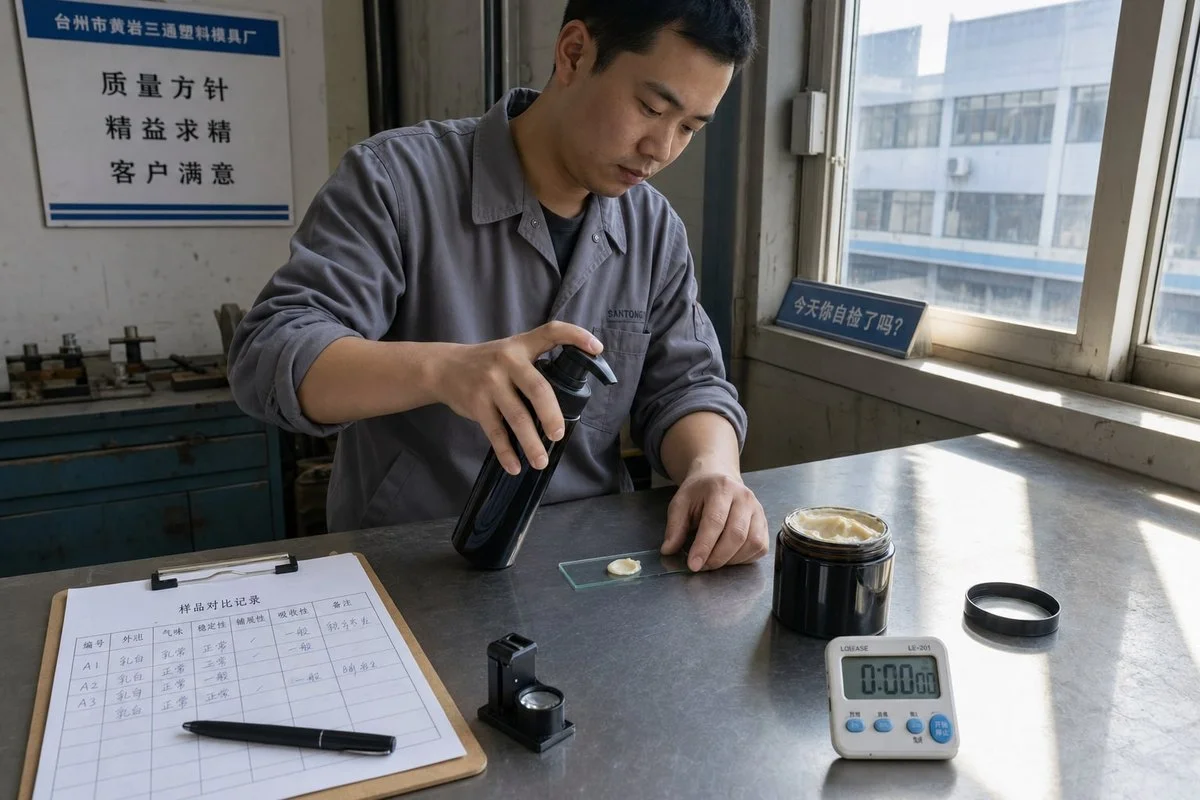
Premiumization through packaging is a genuine margin strategy. Industry sources claim glass can support 15–30% higher price points, and some suppliers cite even larger gaps for identical formulas. Treat those figures as directional claims, not guarantees. What I can confirm from our own export work is simpler: buyers for spa and hotel channels often specify glass, while pharmacy and supermarket buyers usually expect plastic.
Channel-fit mapping
| Sales channel | Typical expectation | Practical recommendation |
|---|---|---|
| Luxury retail / department store | Glass, heavy feel | Glass with premium decoration |
| Premium D2C skincare | Glass or upscale plastic | Glass for hero SKUs |
| Spa and hotel amenities | Elevated look, safe handling | Glass for retail sizes, plastic for wet zones |
| Pharmacy / supermarket | Functional, value-led | Plastic (PET/HDPE) |
| Travel and e-commerce | Durable, lightweight | Plastic, airless options |
The upgrade path for growing brands
Many of our clients start with plastic to validate demand, then move their hero SKU into glass once margins support it. A glossy black plastic pump bottle with a ribbed collar and matte pump—like the 500ml cylinders we run for haircare brands—photographs as premium and survives shipping. Later, the serum line graduates to glass droppers. This staged approach protects cash flow while building the brand story.
One more budget note: glass procurement is exposed to energy-market volatility, since glass furnaces run on natural gas 5. Plastic resin pricing moves too, but long-term glass contracts can swing harder. Factor that into multi-year planning.
Which material offers better OEM/ODM customization options for my specific bottle design needs?
Tooling questions come up in nearly every first call we take. A buyer sends a sketch—an unusual shoulder curve, a custom atomizer, a specific Pantone—and the material choice suddenly decides what is possible.
Plastic offers wider OEM/ODM flexibility: complex shapes, squeeze tubes, airless pumps, full color matching, and lower tooling costs at smaller MOQs. Glass supports elegant classic forms, frosting, spraying, and heavy-wall luxury finishes, but custom glass molds cost more and require larger minimum orders.
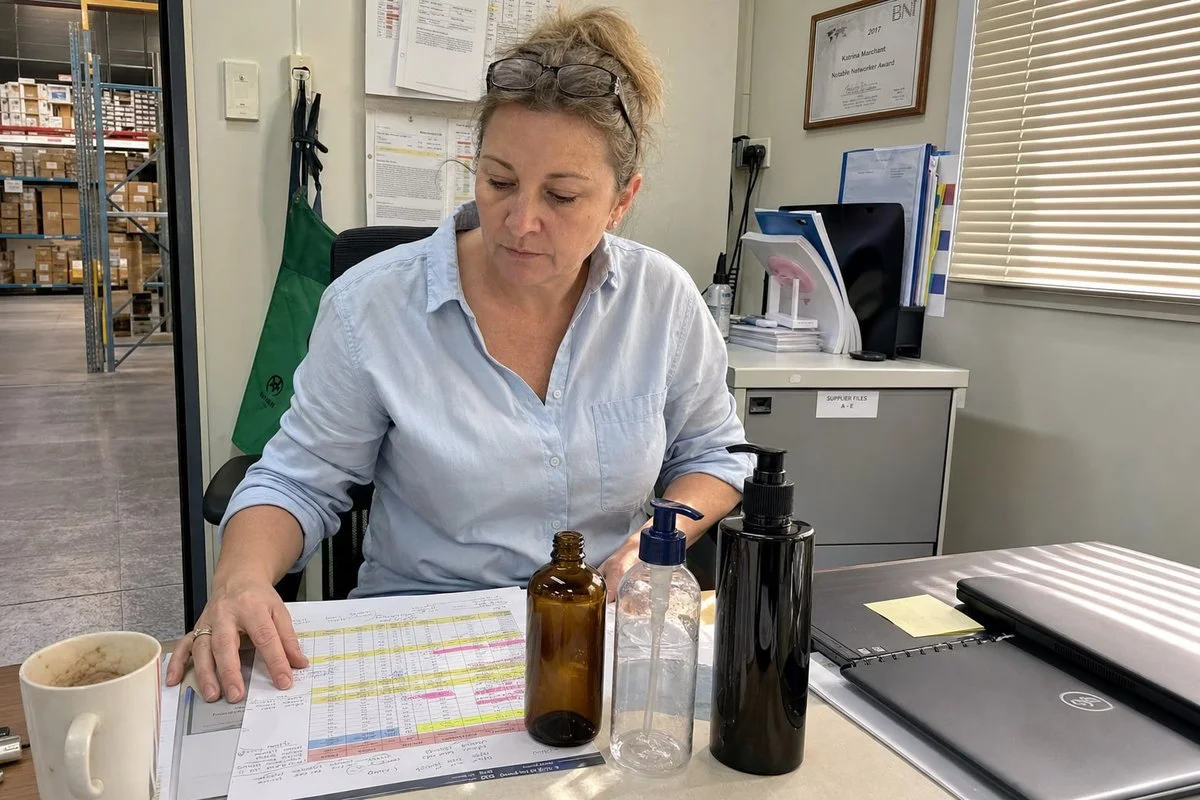
Injection and blow molding give plastic almost unlimited shape freedom. The travel atomizer sets we produce—slim rectangular bodies in magenta, teal, coral, and matte gray—would be impractical in glass at that size and wall thickness. Plastic also enables the full dispensing ecosystem: lotion pumps, trigger sprayers, fine-mist heads, flip-tops, and airless systems. If your product needs a specific dispensing experience, plastic usually gets you there faster and cheaper.
What each material customizes well
Glass has its own strengths. Frosting, gradient spraying, electroplating, silk screening 6, and hot stamping all sit beautifully on glass. Heavy-base bottles and thick-wall jars create the weight cues luxury buyers expect. But a fully custom glass mold demands higher tooling investment and a larger minimum order quantity (MOQ). For a first-time exporter, that is real capital risk.
Questions to ask your supplier before tooling
- What is the MOQ for a stock mold versus a custom mold?
- Can you color-match to my Pantone reference in both materials?
- Do you offer PCR resin options, and at what percentage?
- What decoration processes are available for my chosen material?
- Can you run a pilot batch with full QC and leak testing first?
At our Taizhou facility, we support customization of colors, capacity, materials, and outer packaging across both glass and plastic lines. Sustainable packaging solutions are now a standard request: post-consumer recycled (PCR) plastic 7 answers sustainability briefs at plastic economics, while glass carries its own recyclability story—it recycles infinitely without quality loss, though its heavier carbon footprint in transport deserves honest weighing. Neither material owns the sustainability narrative outright; the credible position depends on your market's recycling infrastructure and your freight distances.
Conclusion
The wrong material choice bleeds margin through freight, breakage, or lost premium pricing. The fix is simple: choose glass for sensitive, premium, sustainability-led products; choose plastic for cost-sensitive, high-volume, early-stage lines.
