
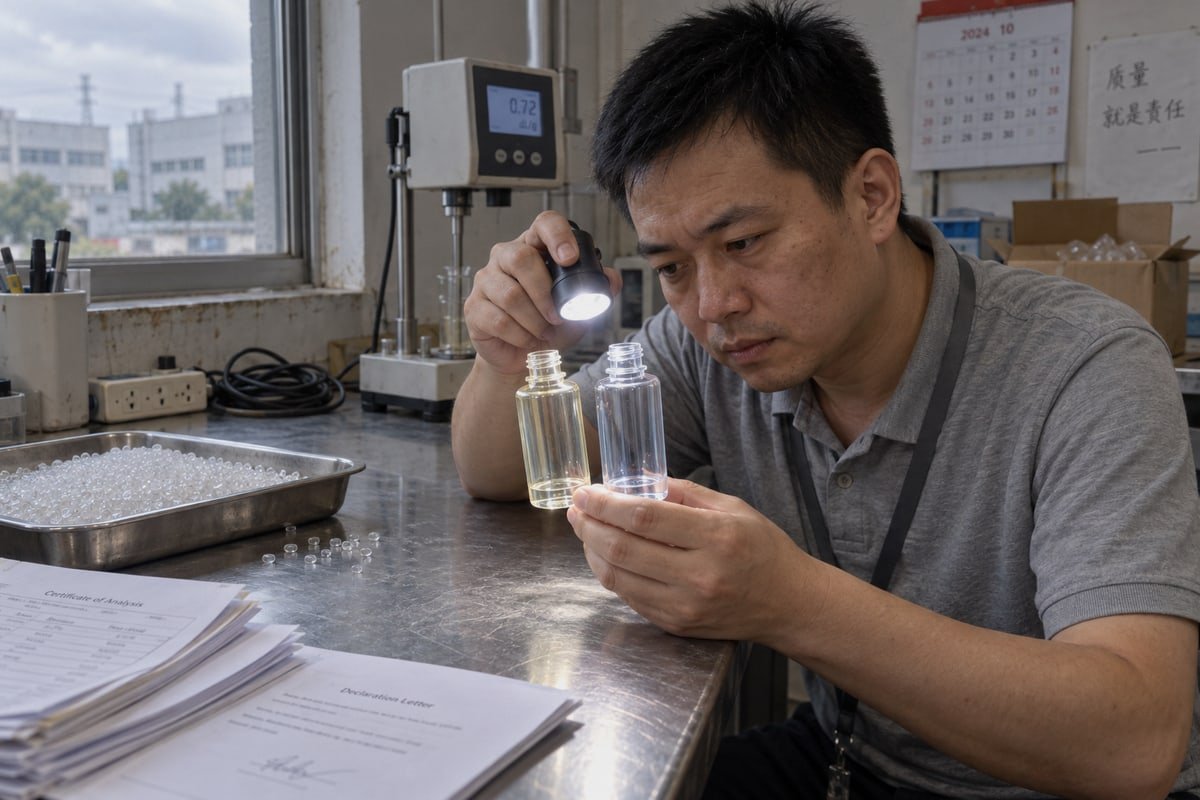
Last spring a buyer sent us a rival’s PET bottle that had yellowed on the shelf. Virgin PET instead of recycled materials was specified, but nobody had verified it.
To confirm a supplier uses virgin PET instead of recycled materials, request a written zero-recycled-content declaration naming the resin producer, batch-matched Certificates of Analysis, chain of custody records back to the resin plant, and third-party verification. Use lab tests such as Intrinsic Viscosity or DSC only as supporting evidence.
That answer surprises many procurement managers. They expect a single lab report to settle the question. It does not. Below I walk through the four questions our customers in the United States, Germany, and Australia ask most often. I explain which documents matter, what an audit can actually show, and where testing helps.
How can I request test reports to verify virgin PET content in my bottles?
A procurement manager in Australia once messaged our sales team on WhatsApp asking for the test that proves virgin PET. I had to explain that no single report does that.
Request test reports that are tied to your specific batch: a Certificate of Analysis showing Intrinsic Viscosity, color values, and acetaldehyde, plus the resin producer's Technical Data Sheet. Ask the supplier to state 0% recycled content in writing, because reports alone cannot prove virgin origin.
The first thing I tell buyers is this: a test report is only as good as its link to your shipment. A generic report from last year tells you nothing about the pellets that went into your bottles this month. So the request has to be specific.
Ask for reports that match your batch
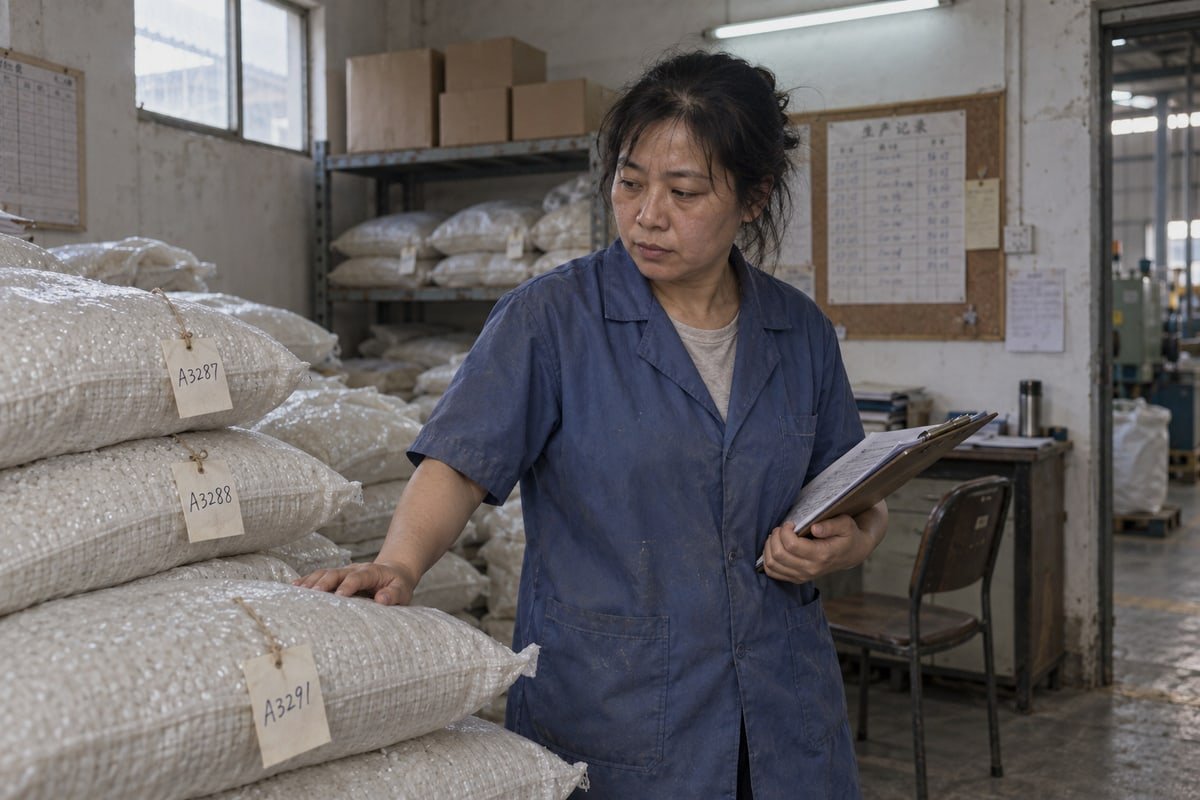
When we run PET bottles at our factory in Taizhou, each resin lot arrives with its own paperwork from the resin producer. That paperwork carries a lot number. Our production record carries the same lot number. Your delivery note should carry it too. If those three numbers line up, the report means something. If they do not, the report is decoration.
Here is the document set I recommend asking for, and what each one should show.
| Document | What it should show | Red flag |
|---|---|---|
| Certificate of Analysis | Lot number, Intrinsic Viscosity, color (L*, a*, b*), acetaldehyde, moisture | No lot number or values copied from the datasheet |
| Technical Data Sheet | Resin grade, producer name, typical properties | Grade name only, no producer named |
| Virgin feedstock declaration | Exact words: 0% recycled content, virgin feedstock only | "Premium PET", "clean PET", "100% PET" with no mention of virgin |
| Delivery record | Production date, lot number, quantity | Dates that do not match the CoA |
Why the wording matters so much
Vague language is the most common problem I see. A supplier writes "food-grade PET" and the buyer reads "virgin." Those are not the same claim. Food-Grade Compliance concerns migration and safety. It says nothing about whether Post-Consumer Resin 1 was blended in. Ask for the exact sentence: this resin contains 0% recycled content and is produced from virgin feedstock only.
There is also a hard scientific limit here. Research reviewed in PMC states there is no analytical method 2 that directly distinguishes recycled PET from virgin PET in a general sense. A German GIZ report says the same thing from the packaging side: recycled content cannot be physically or chemically determined at the level of the final product in a straightforward way. That is why I push buyers toward Material Traceability 3 and away from reports alone. The report supports the claim. The paper trail proves it.
What certifications should I ask my supplier for to confirm material authenticity?
We weigh cost against paperwork every time a German client asks for extra certification. More documents mean more admin, but for virgin PET claims, the paperwork is the proof.
Ask for a signed Letter of Guarantee stating zero Post-Consumer Resin, a resin producer declaration naming grade and plant, third-party chain of custody verification with a checkable certificate number, and food-grade compliance documents. Confirm the certified scope covers your product, site, and delivery period.
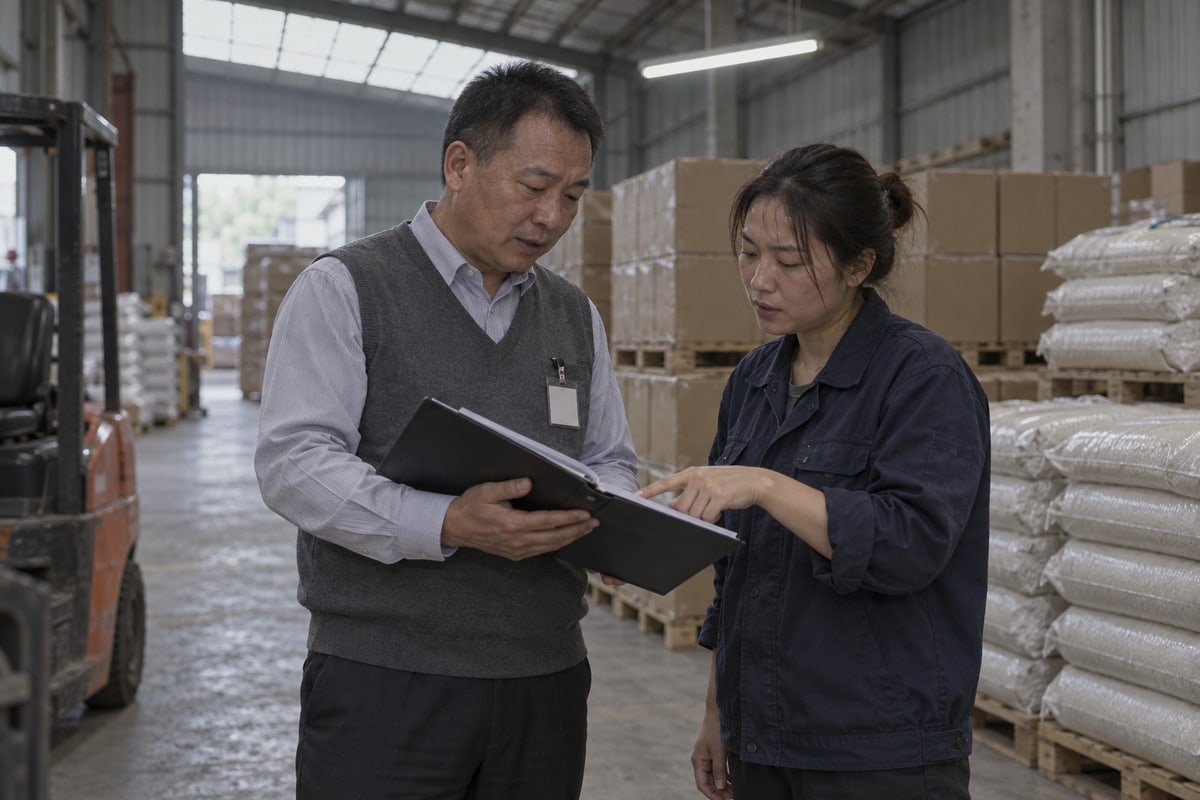
Here is the logic I share with buyers. You cannot easily prove virgin PET by testing. So you prove it by showing that recycled content never entered the supply chain. UL Solutions puts it plainly: auditing the chain of custody is more reliable than testing for validating recycled content in PET products. The same logic works in reverse for a virgin claim.
The certification stack, in order of weight
- Resin producer declaration. This comes from the company that made the pellets, not from the bottle molder. It names the grade and the plant of origin.
- Signed Letter of Guarantee from the molder. This legally attests to zero post-consumer and zero post-industrial regrind in your product.
- Third-party Chain of Custody verification. An independent body confirms the resin stream from producer to finished goods. Ask for the certificate number and check it yourself.
- Food-Grade Compliance documents. Useful for cosmetic and skincare packaging, but remember this proves safety, not origin.
| Certification type | Who issues it | What it proves | What it does not prove |
|---|---|---|---|
| Resin producer declaration | Petrochemical producer | Feedstock origin | Handling after delivery |
| Letter of Guarantee | Bottle supplier | Contractual promise of zero PCR | Nothing without traceability behind it |
| Chain of Custody verification | Independent verifier | Unbroken sourcing record | Properties of one specific bottle |
| Food-contact compliance | Lab or regulator | Migration and safety | Virgin versus recycled origin |
Watch for mass-balance claims
One objection I hear from suppliers is that their sustainability certificate "covers" the material. Ask a direct question: is this product sold under a mass-balance claim? Mass-balance accounting lets a plant with mixed inputs allocate credits on paper. It can be legitimate. But it does not guarantee the pellets in your specific bottle were physically segregated. For a virgin claim, you want physical segregation, not allocation.
One more point. The number 1 inside the triangle on the bottle base is a Resin Identification Code. It tells a recycler the polymer is PET. It says nothing about whether that PET is virgin or recycled. Buyers sometimes treat it as a quality mark. It is not.
Can I tell the difference between virgin and recycled PET during a factory audit?
During an audit of our Taizhou molding area, I watched the auditor spend twenty minutes at the silo labels and two minutes on finished bottles. He knew where evidence lives.
Not by looking at the bottles. Virgin and recycled PET look nearly identical after molding. During an audit, verify material traceability instead: resin purchase records, sealed bags with producer lot numbers, segregated silos, regrind handling logs, and whether recycled resin enters the same facility.
Buyers often expect an audit to be a visual exercise. Pick up a bottle, hold it to the light, check the gloss. I understand the instinct. But after processing, a good recycled resin can match virgin clarity closely. The differences that do exist, such as a slight shift in b* value or a higher Yellowing Index, overlap too much to be decisive. The audit has to follow the material, not the look.
The audit path I recommend
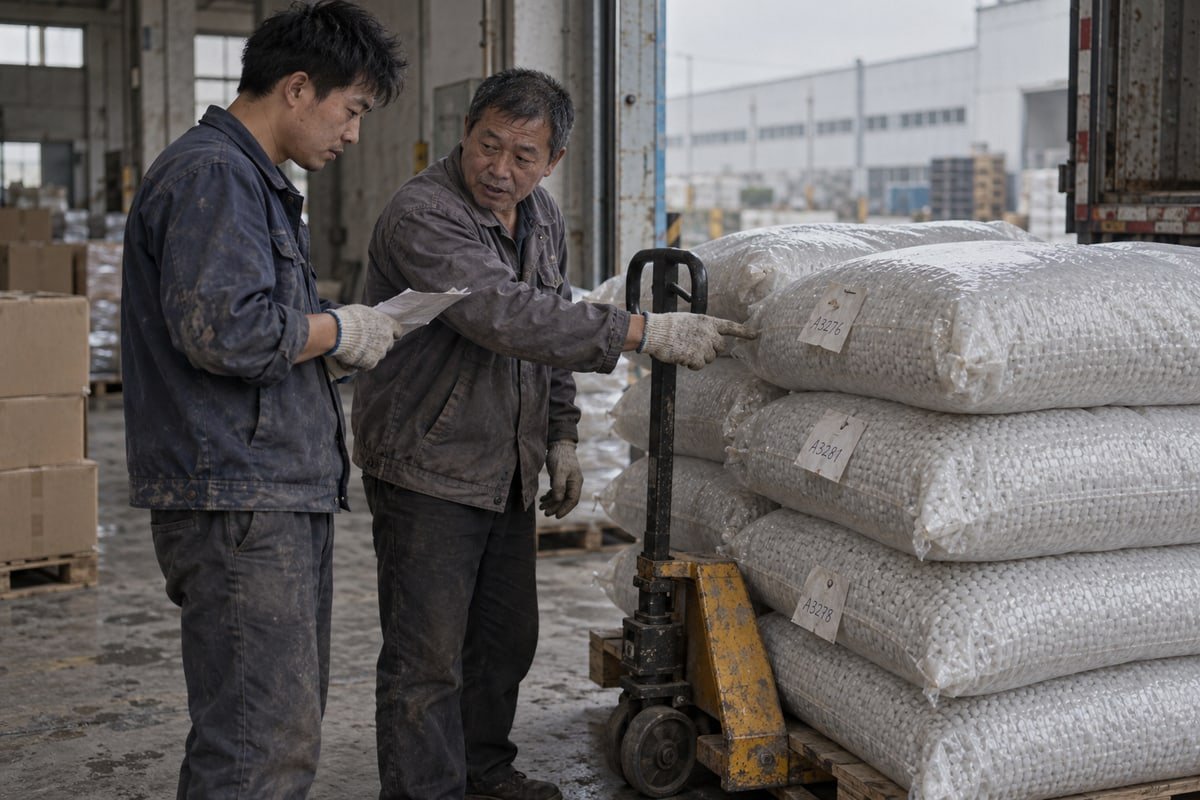
- Start at receiving. Ask to see the last three resin deliveries. Check that bags or octabins are sealed and carry the producer's lot label. Compare the label to the purchase order and the invoice.
- Follow the resin to storage. Are virgin silos physically separate? Are they labelled? Is there any recycled resin on site for other product lines? Shared facilities carry cross-contamination risk, and honest suppliers will tell you how they manage it.
- Check the regrind question. Every molder generates off-spec parts. Ask what happens to them. If they are ground and fed back in, that is post-industrial regrind. Some buyers accept a small internal regrind rate. Others want zero. Either way, it must be declared, not hidden.
- Trace one lot end to end. Pick a recent shipment. Ask the supplier to walk you from the resin producer's document, through the production record, to the packing list. If any link is missing, the virgin claim is weak.
- Review cleaning procedures. Ask how hoppers and dryers are purged between materials. This matters if the same line ever runs colored or recycled grades.
What the finished bottle can still tell you
I do not dismiss the bottle entirely. Obvious grey or yellow tints, black specks, or gels are worth noting. They suggest contamination or Polymer Degradation from repeated heat cycles. But their absence proves nothing. A clean-looking bottle is the starting point, not the conclusion. On our own line we treat visual checks as a QC step for leakage and appearance, and treat traceability as the proof of origin.
Which lab tests should I run on samples before confirming my supplier's PET material?
The hardest lesson I learned about PET testing is that a clean lab result can still hide a recycled blend. Tests narrow the odds; they do not close the case.
Run Intrinsic Viscosity for molecular weight consistency, Differential Scanning Calorimetry for melting behavior, spectrophotometer color and Yellowing Index, GC-MS for volatiles such as limonene, isophthalic acid analysis, and ICP-MS for trace metals. Treat results as corroboration, not as standalone proof of virgin PET.

I want to be clear about where testing fits. It is the third layer, after documents and audit. It is useful in two situations. First, when something in the paperwork looks off and you want a reason to push harder. Second, when a high-stakes launch justifies the extra cost. Here is what each test can and cannot do.
| Test | What it looks for | Why it hints at recycled content | Limitation |
|---|---|---|---|
| Intrinsic Viscosity | Molecular weight | Recycled batches show degradation-driven IV variability | Solid-state polymerized rPET can reach virgin IV |
| Differential Scanning Calorimetry | Melting point, crystallinity | rPET often shows broader melting peaks | Overlap with virgin grades is common |
| Spectrophotometer color | L*, a*, b*, Yellowing Index | PCR tends toward yellow or grey b* shifts | Additives can mask tints |
| GC-MS volatiles | Limonene and other migrants | Flavor compounds carry over from food-use bottles | Absent in some recycled streams |
| Isophthalic acid analysis 4 | Comonomer level | Mixed bottle grades change the ratio | Only indicative, per TÜV Rheinland |
| Fluorescence spectroscopy | Oxidation markers | Multiple heat cycles create degradation products | No universal threshold |
| DEG and catalyst residues | Byproduct levels | Virgin resin has tightly controlled DEG | Requires producer reference values |
| ICP-MS | Aluminum, iron, magnesium | Metals enter during mechanical recycling | Trace metals also come from equipment |
The supplier objection, and my answer
Some suppliers will tell you that a volatile fingerprint or an isophthalic acid result proves authenticity. I understand why. Studies on volatile components show that characteristic compounds can help separate virgin from recycled PET with statistical models. TÜV Rheinland recommends isophthalic acid analysis for products making recycled polyester claims. These are real tools.
But they are screening tools. UL Solutions states that chain of custody auditing is more reliable than testing for validating recycled content in PET. The GIZ report reaches the same conclusion. So when a supplier offers a test but cannot produce Chain of Custody documents, I treat that as a red flag, not as reassurance. The test should back the paperwork. It should never replace it.
A note for food-contact and export markets
If your bottles will hold anything with food-contact rules, remember that recycled PET carries its own burden. FSSAI guidance on food-contact rPET 5 emphasizes challenge tests, decontamination validation, and migration testing. If a supplier claims virgin PET, they should not need those recycled-specific validations. If they hand them to you anyway, ask why.
Conclusion
Yellowed bottles cost brands trust and money. To confirm a supplier uses virgin PET, verify the supply chain first, then let testing support the paperwork.
Footnotes
1. The FDA provides guidance on the safe use of post-consumer resin in food-contact packaging applications. ↩︎
2. PMC hosts peer-reviewed scientific literature regarding the chemical and physical analysis of polymer materials like PET. ↩︎
3. ISO develops international standards for material traceability and quality management within global manufacturing supply chains. ↩︎
4. TÜV Rheinland provides specialized testing and certification services for verifying the chemical composition of plastic resins. ↩︎
5. FSSAI is India’s official food safety regulator referenced for rPET food-contact validation rules. ↩︎
