

Choosing between airless pump bottles and regular pump bottles keeps procurement managers up at night. I have watched a beautiful serum turn brown inside the wrong bottle on our sampling bench. That single packaging mistake wasted the formula, triggered returns, and damaged the brand. The fix starts with understanding how each pump actually works.
Airless pump bottles are better for sensitive, oxidation-prone, or premium skincare formulas because they block air exposure and dispense nearly all the product. Regular pump bottles are better for stable, high-volume, budget-focused products. The right choice depends on your formula, price point, and customer experience.
Neither bottle wins every time. Below, I break down protection, bulk pricing, customization, and shipping risks. By the end, you will know exactly which pump fits your product line.
How Do Airless Pump Bottles Protect My Skincare Formulas Better Than Regular Pump Bottles?
During a filling trial at our Taizhou facility last year, we ran the same vitamin C serum in both bottle types. The difference in color stability after eight weeks surprised even our senior QC inspector.
Airless pump bottles use a vacuum dispensing system with a rising piston instead of a dip tube, so the formula never contacts incoming air. This prevents oxidation, blocks microbial contamination from backflow, and preserves active ingredients like vitamin C and retinol far longer than regular pumps.
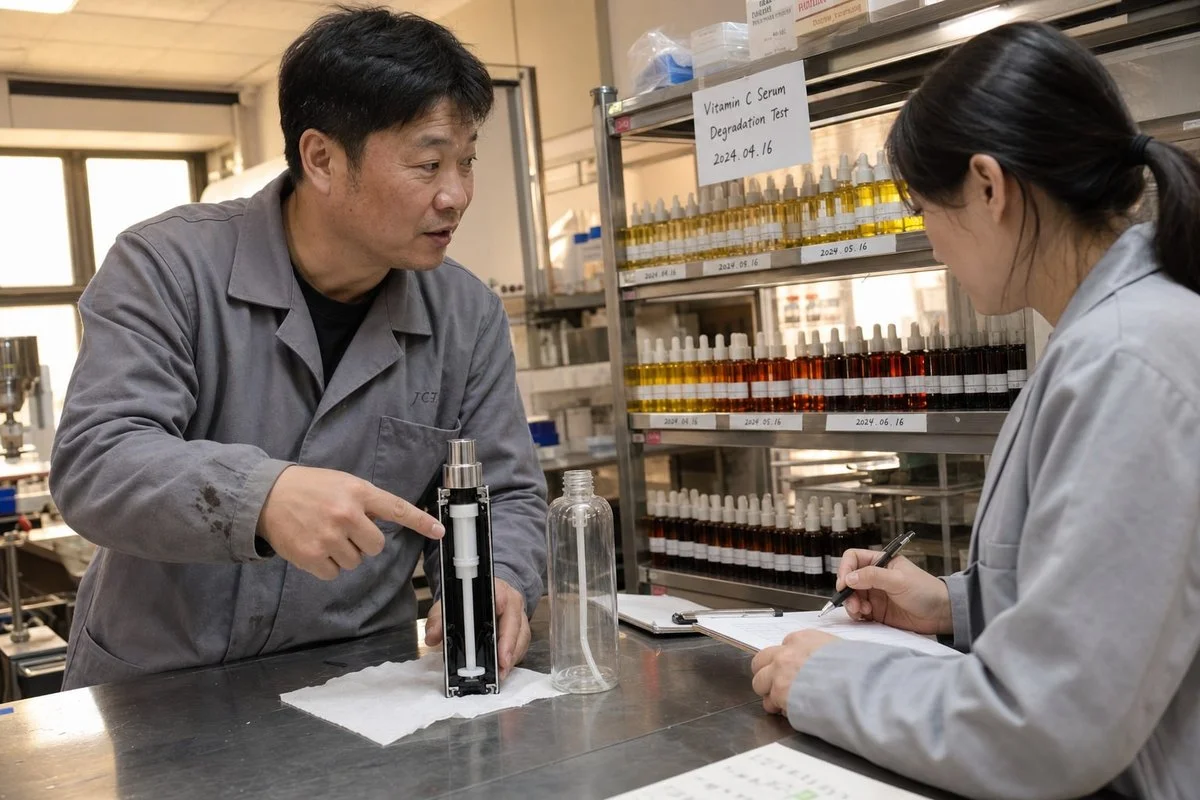
Let me explain the mechanics in plain terms, because the difference is easy to understand once you see it.
The Dip Tube Mechanism vs. the Piston-Driven Pump
A regular pump bottle uses a dip tube mechanism. The tube reaches down into the liquid. When you press the pump, product travels up the tube. But here is the catch. Every time product leaves the bottle, air rushes in to replace it. That air carries oxygen, humidity, and sometimes airborne bacteria.
An airless bottle works differently. There is no tube at all. A piston-driven pump sits at the bottom of the chamber. Each press creates a vacuum that pulls the piston upward, pushing product toward the nozzle. Outside air never enters the chamber. That is the core of oxidation prevention.
Why Atmospheric Exposure Matters for Your Formula
Skincare ingredient stability depends heavily on limiting atmospheric exposure. Actives like vitamin C, retinol, peptides, and many plant extracts 1 degrade when they meet oxygen. Once degraded, the formula loses potency. Customers notice color changes and reduced results, and complaints follow.
There is a second benefit that many buyers miss. Because the sealed chamber blocks microbial contamination 2, airless packaging supports preservative-free formulations or formulas with reduced preservative loads. For clean beauty brands, that is a genuine selling point, not just marketing language.
| Protection Factor | Airless Pump Bottle | Regular Pump Bottle |
|---|---|---|
| Air enters during use | No | Yes, with every press |
| Oxidation risk | Very low | Moderate to high |
| Backflow contamination | Blocked by sealed chamber | Possible through dip tube |
| Product shelf life after opening | Extended | Standard |
| Fit for preservative-free formulas | Strong | Weak |
| Works with refrigerated skincare | Yes, blocks moist air | Condensation risk inside |
One more practical point from our export experience: airless bottles dispense at any angle, even upside down. A dip tube cannot do that, because it needs to stay submerged in liquid to draw product up.
What Cost Differences Should I Expect When Ordering Airless vs. Regular Pump Bottles in Bulk?
Price questions come up in almost every quotation request we receive from procurement managers in the US, Germany, and Australia. The honest answer is more nuanced than a single unit price.
Regular pump bottles typically cost 30% to 60% less per unit than airless pump bottles because they use fewer components and simpler tooling. However, airless bottles can recover the premium through less product waste, fewer returns, and stronger repurchase rates on sensitive formulas.
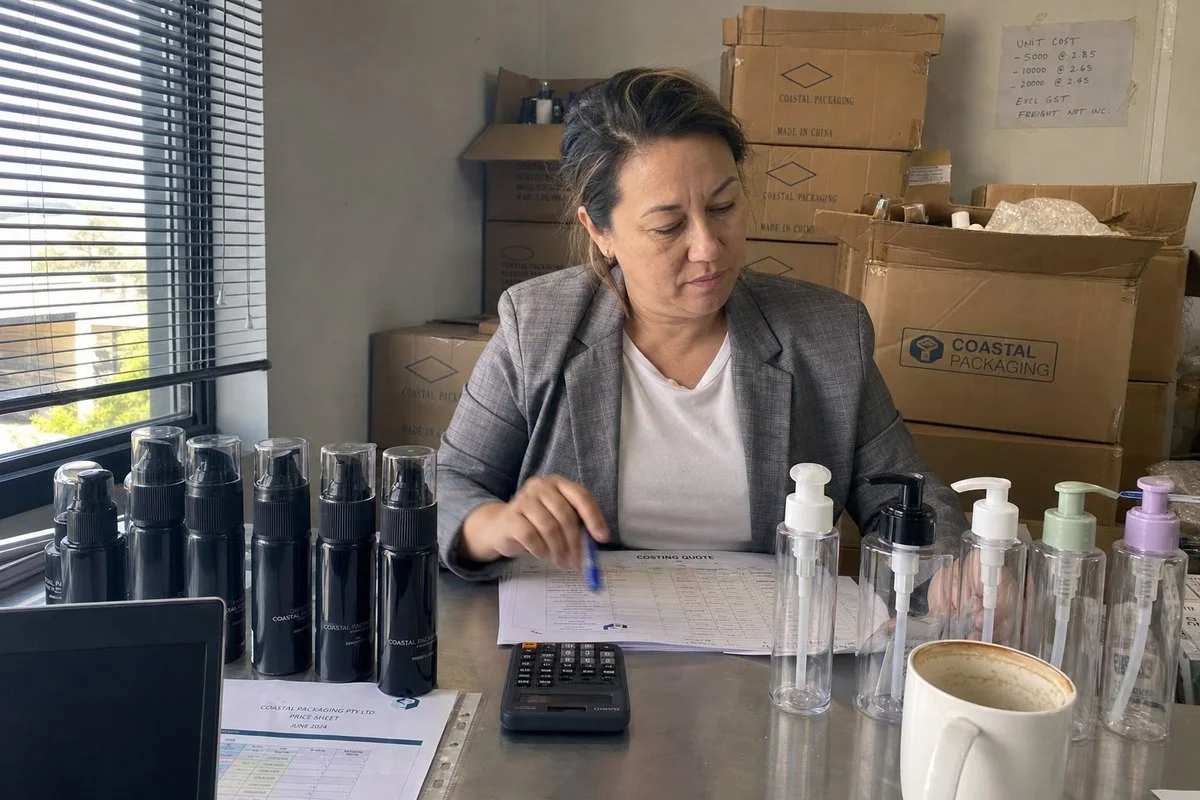
Here is how the cost picture breaks down when you look past the sticker price.
Where the Price Gap Comes From
An airless bottle contains more parts. It needs a precision piston 3, a sealed chamber, a metered actuator, and tighter molding tolerances. Each extra component adds material cost, assembly time, and QC checkpoints. A regular pump is simpler: bottle, dip tube, spring, and actuator. Simpler builds cost less, and that will not change.
Tooling matters too. If you want a custom airless shape, mold investment runs higher because the piston must fit the chamber wall with almost no gap. A loose piston leaks air and kills the vacuum. We hold those tolerances tightly on our production line, and that precision is part of what you pay for.
The Hidden Math: Product Waste Reduction
Now consider what happens after the sale. Regular pumps often strand 10% to 20% of the formula below the dip tube. Customers see unusable residue and feel cheated. Airless systems evacuate nearly all the contents. That is product waste reduction your end customer can actually see.
| Cost Factor | Airless Pump Bottle | Regular Pump Bottle |
|---|---|---|
| Typical unit cost in bulk | Higher | Lower |
| Component count | 5–7 parts | 3–4 parts |
| Custom mold investment | Higher | Lower |
| Product evacuation rate | Near 100% | 80–90% |
| Return risk on sensitive formulas | Lower | Higher |
| Best fit | Premium serums, actives | Cleansers, body care |
My advice to buyers is simple. Run the numbers on your formula cost per milliliter. If your serum costs more than your packaging, wasted product and spoiled actives cost you more than the airless premium ever will. If you fill an inexpensive body lotion, the regular pump wins on economics, and that is a perfectly smart choice.
Which Option Offers More Flexibility for My Custom OEM Packaging Needs?
A buyer from Melbourne once messaged me on WhatsApp with a mood board and one line: "Can you match this in six weeks?" Her project taught me a lot about where each bottle type bends and where it breaks.
Regular pump bottles offer broader customization in shapes, sizes, and materials because their simple structure fits almost any bottle body. Airless bottles offer premium finishes and precise dosing but require the chamber and piston geometry to stay cylindrical, which limits extreme shape changes.

Customization is where our OEM/ODM work gets interesting, so let me walk through the real options and the real limits.
What You Can Customize on Each Bottle Type
With regular pump bottles, almost everything is open. You can choose PET, glass, PP, or aluminum bodies. Capacities run from 30ml travel sizes to 500ml salon formats. Shapes can be round, square, oval, or fully bespoke. Actuators, collars, and closures come in dozens of styles. Our team regularly matches Pantone colors, applies soft-touch coatings, and adds silk-screen or hot-stamp decoration.
Airless bottles are more constrained on the inside but very flexible on the outside. The internal chamber must stay cylindrical so the piston seals properly. But the outer shell can take different profiles, double-wall constructions, metallic finishes 4, and frosted or glossy effects. Airless formats also handle high-viscosity liquids well when we match the actuator orifice to the cream's thickness, which is a calibration step our engineers do on every custom order.
A Practical Customization Checklist
Before requesting samples, confirm these five points with your supplier:
- Capacity range available for your chosen format.
- Material options and compatibility with your formula.
- Actuator output per press, matched to your dosing needs.
- Decoration methods and minimum order quantities per color.
- Lead time for custom molds versus stock molds.
One emerging option worth mentioning: some airless designs now use lightweight inner-pod refill systems. The customer keeps the outer shell and replaces only a thin inner cartridge. This can cut plastic weight significantly and gives sustainability-focused brands 5 a credible story, though recyclability still depends on the actual materials and local recycling systems. We always tell clients to qualify eco claims carefully rather than overpromise.
How Can I Choose the Right Pump Bottle to Minimize Leakage and QC Issues During Shipping?
Leakage claims are the fastest way to lose a wholesale customer, and I have signed enough inspection reports over the years to know exactly where failures hide before a container leaves China.
Choose airless pump bottles for air-freight and sensitive formulas because their sealed vacuum chamber resists pressure changes and leaks. For regular pumps, insist on torque-tested closures, gasket checks, and locked actuators. Always require pre-shipment QC inspections and drop tests regardless of bottle type.
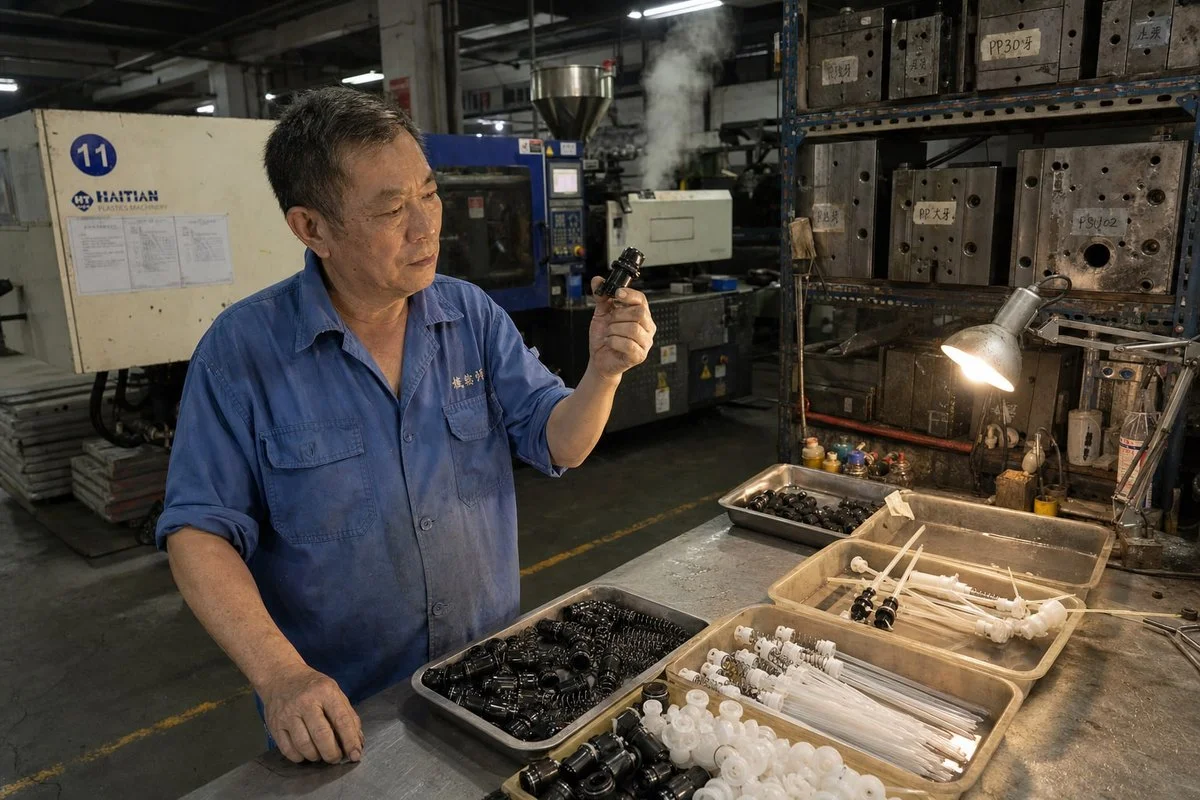
Shipping stress is real, and it exposes every weak point in a bottle. Let me show you where problems start and how to prevent them.
Where Leaks Actually Happen
Most leakage does not come from the bottle body. It comes from the interface points: the pump collar threading, the gasket seal, and the actuator lock. During air transport, cabin pressure changes 6 cause air trapped inside a regular bottle to expand. That pressure pushes product up the dip tube mechanism and out through the nozzle. Airless bottles resist this because there is little or no trapped air inside the chamber, so pressure swings have less to push against.
Temperature swings cause a second problem. A container crossing the equator can heat past 50°C, thinning the formula and stressing seals. Refrigerated skincare faces the opposite issue in a regular bottle, where incoming moist air condenses inside the headspace.
Our QC Process Before Every Shipment
On our line, every export order passes through a fixed sequence:
| QC Step | What We Check | Why It Matters |
|---|---|---|
| Torque test | Cap and collar tightness | Loose collars are the top leak cause |
| Vacuum leak test | Seal integrity under pressure | Simulates altitude changes in air freight |
| Actuation test | Pump output and priming | Confirms consistent dosing per press |
| Drop test | Filled bottle from set height | Simulates rough handling in transit |
| Visual inspection | Molding flash, gasket seating | Catches defects before packing |
Questions to Ask Your Supplier
Ask for the leak-test method, the AQL sampling level 7, and photos of the actual pre-shipment inspection. Ask whether actuators ship locked or with clips. Ask about DDP logistics options if you want the supplier to own the shipping risk end to end. A supplier who answers these quickly, with specifics, is a supplier who has been through the pain before. A vague answer usually means the QC step does not exist.
Conclusion
Airless pump bottles protect sensitive formulas and cut waste; regular pumps win on cost and simplicity. Match the bottle to your formula and budget, then verify QC before shipping.
Footnotes
- Scientific review of plant extracts used in skincare and their susceptibility to environmental degradation. ↩︎
- Official FDA safety information regarding microbiological risks in cosmetic manufacturing and packaging. ↩︎
- Authoritative Wikipedia entry explaining the mechanical design and function of pistons in various systems. ↩︎
- Wikipedia overview of surface finishing techniques used to enhance the appearance and durability of manufactured products. ↩︎
- EPA resources for organizations looking to implement sustainable material management and recycling programs. ↩︎
- WHO health and safety guide explaining the physics of air pressure changes during flight. ↩︎
- Wikipedia entry defining the industry standard for statistical quality control and sampling. ↩︎
